

From Waitlist to Revenue: Converting Interest Into Cash in 30 Days
A waitlist is a liability with an expiration date. Here is the exact 4-email drip sequence, founder-pricing offer structure, and conversion benchmarks to turn 200–2,000 signups into paying beta customers in 30 days.

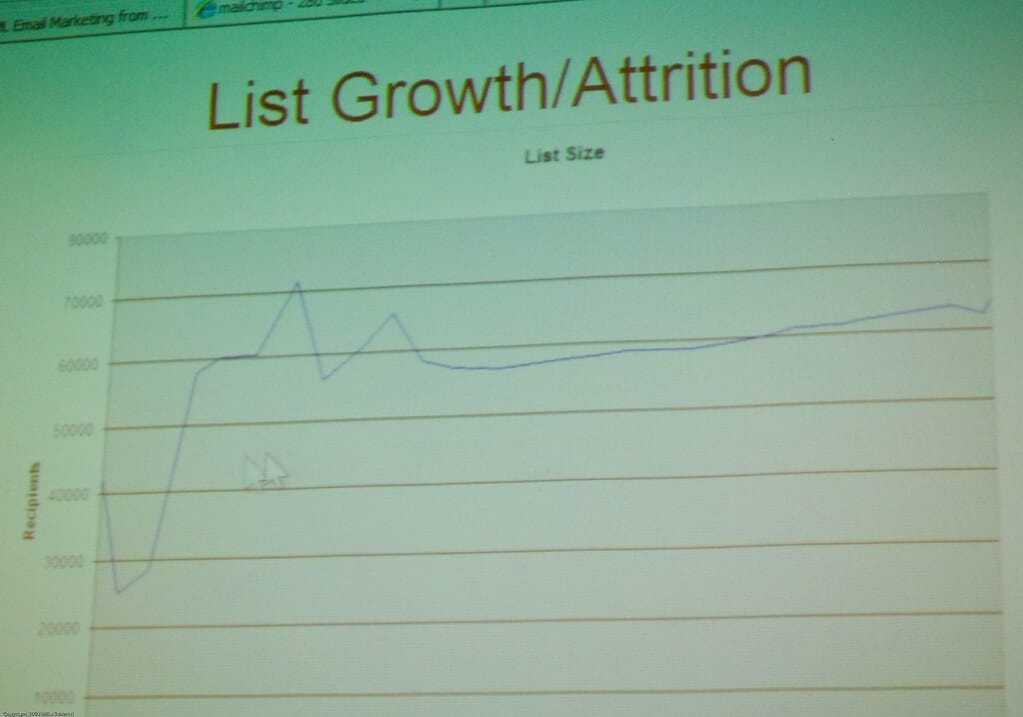
Here’s the hard truth most list-building content skips: a waitlist is not an asset — it’s a liability with an expiration date. If you’ve collected 200 to 2,000 emails from people who were excited about your idea, and those emails are sitting in a Mailchimp or ConvertKit account untouched, intent is decaying right now. The goal of this guide is to show you exactly how to convert waitlist to paying customers inside a single 30-day sprint, using a four-email drip sequence, a founder-pricing offer structure, and concrete benchmarks so you know whether your numbers are healthy or broken.
I’ve run this playbook twice. The first time I waited 11 weeks before making any offer — I lost roughly half my engaged list to silence. The second time, I compressed everything into 30 days and hit a 7.4% conversion rate on a warm list of just under 600 signups. To give that number context: I was selling a B2B SaaS tool at a $49/month founding rate, my list was 34 days old at sprint start, and I used ConvertKit for the sequence. That’s not a cherry-picked outlier — it’s the kind of result a warm, well-timed list produces. The difference wasn’t the product. It was the urgency architecture.
Why Your Waitlist Is Cooling Faster Than You Think
Email databases decay at roughly 22.5% annually — about 2% per month — and SaaS or tech-adjacent lists decay closer to 30–35% per year according to Bulk Email Checker’s list decay analysis. But technical deliverability is only part of the problem. Intent decays even faster than email addresses do.
The benchmark that matters most here: 50% of waitlist members who convert do so within the first 30 days of being opened access, according to ScaleMath’s waitlist conversion research. Push past 90 days of silence and that number falls below 20%. For waitlists older than 60 days, you’re not running a launch — you’re running a re-engagement campaign. The script changes significantly, and I’ll cover that with a full email structure below.
The validation work you did to build that list was the hard part. If you ran pre-launch discovery correctly — talking to prospects, testing landing page messaging, maybe even doing some pre-sales — you’ve already done what most founders skip. The gap between a validated interest list and real revenue is almost always a sequencing and offer structure problem, not a demand problem. As I covered in why products fail before launch without real validation, the list itself is just proof of concept — converting it is a separate, specific skill.
The 30-Day Conversion Sprint: What You’re Actually Doing
This isn’t a slow nurture sequence. You’re running a contained sprint with a hard deadline, limited spots, and a founder-tier pricing structure that only exists for this window. The sprint has four emails over 30 days, each with a distinct job. Your goal is to move signups along a four-stage intent ladder: curious → engaged → convinced → paying.
Conversion Benchmarks Before You Start
Waitlist conversion rate is the percentage of email signups who purchase within a defined sprint window — calculated as paying customers divided by total active list size at sprint start. Use this definition to set your target before the sprint, not after.
| List Temperature | List Age | Realistic Conversion Target | Strong Performance |
|---|---|---|---|
| Warm (engaged in last 30 days) | < 30 days | 5–10% | 12–15% |
| Cooling (some opens, few clicks) | 30–60 days | 3–7% | 8–10% |
| Cold (60–90 days, minimal activity) | 60–90 days | 1–4% | 5–6% |
| Stale (90+ days, re-engagement needed first) | 90+ days | < 2% without re-warm | 3–5% after re-warm |
These ranges are based on my own sprint data directionally confirmed by GetWaitlist’s conversion rate benchmarks and ScaleMath’s waitlist research. If your list is in the “stale” bucket, run the re-engagement protocol (detailed below) before starting the main sprint — skipping that step actively damages your sending domain reputation with Gmail and Outlook.
The 4-Email Drip: Exact Frameworks With Sample Copy
Each email has one job. Resist the urge to combine them — diluting the CTA is the most common structural mistake I see founders make with this sequence. Below each structural breakdown, I’ve included a full sample email with placeholder variables you can adapt directly.
Email 1 — The Reactivation (Send Day 1)
Subject line: “The doors are opening — here’s what that means for you”
Alternate: “[First name], you’re on the list. Here’s what happens next.”
Job: Remind them who you are, why they signed up, and signal that something real is happening. Do not make the offer yet.
Body structure:
- One-sentence reminder of the product and the specific pain it solves (use the exact language from your landing page — they responded to it once).
- Brief founder credibility statement: what you’ve built, tested, or shipped since they signed up.
- Tease: “Over the next few weeks, I’m opening [X] spots for founding members — people who helped make this real. Details coming Thursday.”
- CTA: A single reply-based question — “Before I send the details, what’s the #1 thing you’re hoping [product] helps you do?” (Replies improve deliverability and this response data is invaluable for Email 3’s copy.)
Sample Email 1 — adapt and paste:
Subject: The doors are opening — here’s what that means for you
Hey [First name],
A few months back you signed up for [Product Name] — the tool that helps [ICP description] stop [specific pain] without [the workaround they hate].
Since then, I’ve [shipped the core feature / run a closed beta with X users / rebuilt the onboarding based on your feedback]. It’s real now. And I’m opening it to the founding group first — before any public announcement.
Over the next few weeks, I’m inviting [X] people from this list to lock in a founding rate that doesn’t exist anywhere else. Details land Thursday.
Before I send those: what’s the #1 thing you’re hoping [Product Name] helps you with? Hit reply — I read every one.
— [Your name]
Target metrics: 35–50% open rate, 8–12% reply rate. Anything below 20% open rate means your list is colder than you thought — pause and run the cold-list re-warm first before continuing.
Email 2 — The Evidence Drop (Send Day 7–8)
Subject line: “What [X] beta users figured out in the first week”
Alternate: “The thing we didn’t expect when we ran the beta”
Job: Build credibility through specific outcomes. If you ran a beta, use real user results. If you didn’t, use your own use-case numbers or a before/after scenario built from discovery interviews.
Body structure:
- One specific, concrete result: “Beta user Sarah cut her [task] from 3 hours to 40 minutes using [feature].” Specificity beats vague claims every time.
- Acknowledge the problem plainly — don’t oversell. “This isn’t magic. It takes [X] to set up and [Y] to see results.”
- Soft mention of founding pricing: “Next week I’m sending the founding member offer to this list first, before it goes public.”
- CTA: One link to a short video, case study, or live demo. No paywall, no form.
Sample Email 2 — adapt and paste:
Subject: What [X] beta users figured out in the first week
Hey [First name],
[Beta user / I] used [Product Name] to [specific task] and cut [metric] from [X] to [Y]. It wasn’t instant — setup takes about [time]. But after that first week, the pattern held.
I’m not going to oversell this. [Product Name] is built for [specific ICP]. If that’s not you, it probably won’t click. If it is, the results are consistent.
Next week I’m sending the founding member pricing to this list before it goes anywhere public. You’ll get first access and a rate that locks in permanently.
In the meantime: [link to demo / case study / video] — no form, just watch.
— [Your name]
Email 3 — The Offer (Send Day 14–16)
Subject line: “Founding member pricing — [X] spots, closes Friday”
Alternate: “Your founding rate: $[price]/mo locked in forever (closes in 72 hours)”
Job: Make the full offer clearly. This is the only email where the primary CTA is a payment link. Everything else is context.
Body structure:
- State the offer in the first three lines — price, what they get, deadline. Never bury the lede.
- Explain the why behind founder pricing: “You took a bet on this early. The rate you lock in today is your rate permanently — even when we raise prices at public launch.”
- List three to five specific features/benefits in bullet form. Short, scannable, outcome-focused (not feature-focused).
- Add a one-line objection handler: “If you’re not sure yet, reply and tell me what’s holding you back. I read every reply.”
- CTA: Direct Stripe payment link or Lemon Squeezy checkout. Remove all friction — no account creation before payment if you can help it.
Sample Email 3 — adapt and paste:
Subject: Founding member pricing — [X] spots, closes Friday
Hey [First name],
Here it is: founding member access to [Product Name] at $[founding price]/month. That rate is locked in for you permanently — it won’t change when we raise to $[public price] at public launch. [X] spots. Closes Friday at midnight.
What you get:
- [Outcome-focused benefit 1]
- [Outcome-focused benefit 2]
- [Outcome-focused benefit 3]
- 30-minute onboarding call with me directly
- Access to the founding member Slack group
You took a bet on this idea before it was real. This price is my way of honoring that.
→ [Stripe / Lemon Squeezy payment link]
Still not sure? Reply with your biggest hesitation — I’ll answer personally before Friday.
— [Your name]
Email 4 — The Last Call (Send Day 21–23)
Subject line: “Last call — founding spots close tomorrow”
Alternate: “[First name], the founding rate closes at midnight”
Job: Close the window. This email goes to non-purchasers only (segment out anyone who already bought). It is short — three to five sentences maximum.
Body structure:
- Remind them what closes and when (exact date and time).
- State what changes after: “After Friday, the price goes to $[public price] and the early-access window closes.”
- One direct sentence for fence-sitters: “If you’re still unsure, reply with your biggest hesitation — I’ll answer personally before the window closes.”
- Payment link. Nothing else.
Sample Email 4 — adapt and paste:
Subject: Last call — founding spots close tomorrow
Hey [First name],
Founding pricing for [Product Name] closes tomorrow at midnight [EST / your timezone]. After that, the rate moves to $[public price] and I’m closing the early-access window.
If you’re still on the fence, reply right now with your biggest hesitation — I’ll answer personally before midnight.
→ [Payment link]
— [Your name]
In the sprints I’ve run, 20–30% of conversions cluster in the 24-hour window before deadline — a pattern consistent with email urgency research across SaaS launches. The last-call email is often the highest-revenue email in the entire sequence. Do not skip it, and do not send it more than 24 hours before close — too early and the urgency evaporates.
Handling the Cold List: Waitlists Older Than 60 Days
If your list has been quiet for more than 60 days, you have a re-warm problem before you have a conversion problem. Running the offer sequence on a cold list produces low open rates, poor deliverability, and can permanently damage your sending reputation with Gmail and Outlook. Before Day 1 of the sprint above, you need a structured re-engagement protocol.
Step 1: Segment First
Before sending anything, pull your list and tag everyone by their last engagement date:
- Opened something in the last 90 days: Move directly into the 4-email sprint. These are still warm enough.
- No opens in 91–180 days: This is your re-engagement segment. Send the re-warm email below before Email 1.
- No opens in 180+ days: Remove from the sprint entirely and move to a separate “revival” list you contact once a quarter at most. Do not send offer emails to this group — it actively hurts your domain reputation.
Step 2: Send the Re-Engagement Email (7–10 Days Before Sprint Day 1)
Subject line option 1: “Still interested? (One quick question)”
Subject line option 2: “[First name], I’ve been quiet — here’s why that’s changing”
Job: Get a binary signal — in or out. Do not try to sell anything here. You’re warming up deliverability and resetting the relationship.
Sample Re-Engagement Email — adapt and paste:
Subject: Still interested? (One quick question)
Hey [First name],
I’ve been heads-down and haven’t been in your inbox enough. That changes this month.
You signed up for updates on [Product Name] a while back. I’m opening it to the founding group this month and wanted to check in before I send details.
If you’re still interested, just hit reply and say “yes” — or click here: [single CTA link to landing page or demo].
If you’d rather come off the list, no hard feelings: [unsubscribe link]. I’d rather have a smaller, engaged list than a large one that doesn’t want to hear from me.
— [Your name]
Step 3: Prune and Proceed
Give it five days after sending the re-engagement email. Remove everyone who did not open it. Yes, your list will shrink — sometimes by 40–60% for lists older than 90 days. That’s the correct outcome. A pruned list of 300 engaged contacts will convert at 4–7%; the original 800-person stale list would have converted below 1% and tanked your sending domain in the process.
What “healthy engagement” looks like before starting Email 1: After the re-warm, you want to see at least 25% open rates on your next send. If you’re below that after pruning, your list age is likely over 120 days — wait another 2–3 weeks and send one more value-only email (no offer, no teaser) before running the sprint. Trying to rush a cold list into a conversion sprint is the single most common reason founders report that “email doesn’t work.”
The Offer Structure: What Actually Closes Without a Sales Call
Most founders underprice the founding tier because they’re nervous, or overprice it because they copied a competitor’s public rate. The frame that works: founder pricing is a permanent rate lock, not a discount. You’re not discounting the product — you’re giving early believers a rate that never changes even as you raise prices. That reframe removes the “am I being sold a lesser version” objection instantly.
A structure that converts well for early-stage B2B SaaS or productized services:
- Founding price: 35–50% below your planned public launch price
- Billing: Monthly to reduce commitment friction; offer annual at checkout as an upsell at 10–15% discount
- Access timing: Immediate — they get login credentials or onboarding within 24 hours of payment
- Spot cap: 20–50 seats, or a hard date (“founding pricing closes June 30 at midnight EST”)
- Included extras: One item that doesn’t cost you much but has high perceived value — 30-minute onboarding call, a private Slack or Discord channel, early access to features in the roadmap
Payment Setup: Stripe, Lemon Squeezy, and the Tax Trap
For US-based founders, Stripe is the standard. Set up a single payment link — not a full subscription page — for frictionless checkout during the sprint. You can migrate to a full Stripe subscription product after you’ve validated demand. Keep it simple for the sprint: one URL, one price, one click to pay.
Getting first customers is often more of an engineering challenge than an inspiration one — as I wrote in how traction is engineered, not discovered, the tactics that move signups to payment are learnable and repeatable. The offer structure above is one of the core levers.
Tracking and Adjusting Mid-Sprint
Don’t wait until Day 30 to look at your numbers. Check these metrics after each email:
- Open rate: Below 25% after Email 1 is a list temperature warning — segment and re-warm before proceeding.
- Reply rate on Email 1: Aim for 5–12%. This is a deliverability signal and a market research gift. Read every reply.
- Click-to-open rate on Email 3: Should be 15–25% of openers. If it’s below 10%, your offer structure or price point needs work — reply objections from Email 3 will tell you which.
- Conversion rate (paying/list): 5–10% on a warm list is a solid benchmark. If you’re at 2% or below after Email 4, don’t extend the window — instead, move non-converters to a long-term nurture sequence and do a 20-minute discovery call debrief with five people who opened but didn’t buy.
One thing I’ve learned running these sprints: the people who don’t convert in 30 days are giving you just as much information as the ones who do. Segment non-openers (likely wrong audience or list decay), non-buyers who clicked (strong signal — they’re interested but have an objection), and non-buyers who never clicked (weaker signal — they may just not be ready). Treat each segment differently in your next campaign.
If you’re wondering whether any of this is worth it for a scrappy first attempt, the numbers from my first $100 online experiment — documented in my live $100 test with no audience and no shortcuts — show what actually happens when you stop theorizing and start running the clock.
FAQ: Converting Waitlist to Paying Customers
What is a good conversion rate for a waitlist launch?
A good waitlist conversion rate is 5–10% for a warm list (signups engaged within the last 30 days). Strong performance on a warm list is 12–15%. For lists that have cooled between 30–60 days, 3–7% is realistic. Below 2% on a warm list is a signal to revisit your offer structure, price point, or audience fit — not your email copy. These benchmarks are consistent with data from GetWaitlist and ScaleMath and directionally confirmed by my own sprint data across multiple campaigns.
How do you re-engage a waitlist that has gone cold?
Send a single re-engagement email with two options: reply to confirm interest, or unsubscribe with no hard feelings. Wait five days, remove everyone who didn’t open, then start the 4-email sprint with whoever remains. For lists older than 90 days, expect to lose 40–60% of your list during this pruning step — that is the correct and expected outcome. The pruned list will convert at multiples of what the full stale list would have.
How many emails is too many in a 30-day conversion sprint?
Four emails over 30 days is the minimum viable sequence. Some founders run five or six by adding a mid-sprint check-in after Email 2, but beyond six emails in a single sprint, you start trading conversion gains for unsubscribes. The key variable isn’t quantity — it’s that each email has exactly one job and one CTA. Multi-CTA emails are the most common structural mistake in this sequence.
What if only part of my list is still engaged after 60+ days?
This is the most common scenario, and it’s handled by segmentation before you start. Pull engagement data from your email platform, tag by last-open date, and run the re-engagement protocol on the cold segment before folding them into the main sprint. The warm segment (opened in last 90 days) goes straight into Email 1. Mixing cold and warm contacts into a single sequence drags down your overall metrics and can suppress deliverability for the engaged contacts who would have converted.
Is there a risk of burning the list if the product isn’t ready?
Yes, but the risk runs in one direction: if you collect payment and can’t deliver within the promised timeframe, you’ll issue refunds and damage trust permanently. The guard against this is being explicit in Email 3 about exactly what founding members get and when. “Early access” needs a specific date range, not a vague “soon.” If you can’t commit to a date within 60 days of the sprint, delay the offer until you can — or structure the founding tier as a pre-sale with a clear refund policy and stated delivery window.
The 30-Day Finish Line: What Converting Waitlist to Paying Customers Actually Looks Like
At the end of a well-run 30-day sprint, you should have a small but real cohort of paying customers, a set of reply-based objections that tells you exactly what to build or communicate next, and a baseline conversion rate you can improve in the next sprint. The founders I’ve watched do this well almost always say the same thing: they expected more signups to convert and were surprised by how much they learned from the ones who didn’t.
That’s the actual value of running the sprint with rigor — not just the revenue (though the revenue matters a lot), but the directional signal. Five to ten percent of a warm list converting to paid is validation that demand is real and the offer is viable. Below two percent is a signal to revisit either the product positioning or the audience fit before spending more time on list growth. Both outcomes are useful. Neither is available to founders who let their waitlist sit cold while waiting for perfect conditions.
Start the clock. Send Email 1 this week.
This post is for general informational and educational purposes only. It does not constitute financial, legal, or tax advice. Payment platform choices, pricing decisions, and revenue strategies depend on your individual business circumstances. Consult qualified professionals for advice specific to your situation.
Keep reading

Can a Non-Coder Actually Ship With Cursor? A Developer’s Honest Test
Cursor is not no-code. Here is what a non-technical founder can realistically ship in weeks — and when you still...
Self-Hosting n8n: The Real Cost vs Cloud (and the 6 hrs/week DevOps Tax)
A founder-facing TCO teardown of n8n Cloud vs self-hosted infra — including the DevOps hours nobody puts in the spreadsheet.

reMarkable vs Boox vs Kindle Scribe: Which One Actually Replaces the Note Vault You Abandoned?
An honest, spec-and-review-based comparison of reMarkable, Boox, and Kindle Scribe for anyone who quit Obsidian or Notion and wants notes...

6 Books That Actually Changed How I Run a One-Person Business (2026)
Not a top-20 listicle. Six books I actually read and applied while running a one-person AI business, and the one...

Do Phone Lock Boxes Actually Work for Founder Focus? The Commitment-Device Case
A clear-eyed look at whether phone lock boxes help a one-person founder focus — grounded in commitment-device research, with free...
The ‘Second Brain’ is Over: Why You Need a Second Executioner
Stop hoarding notes and start shipping. Discover why the Second Brain fails and how the Second Executioner model uses Personal...
You've reached the end — no more posts to load.
No comments yet — be the first to share your thoughts.