

Quarterly Estimated Tax & Safe Harbor for Founders With Lumpy 2026 Income
A systems guide for self-employed founders with variable revenue: how to use the two 2026 safe-harbor tests and Schedule AI annualized installments to avoid underpayment penalties without overpaying in slow quarters.

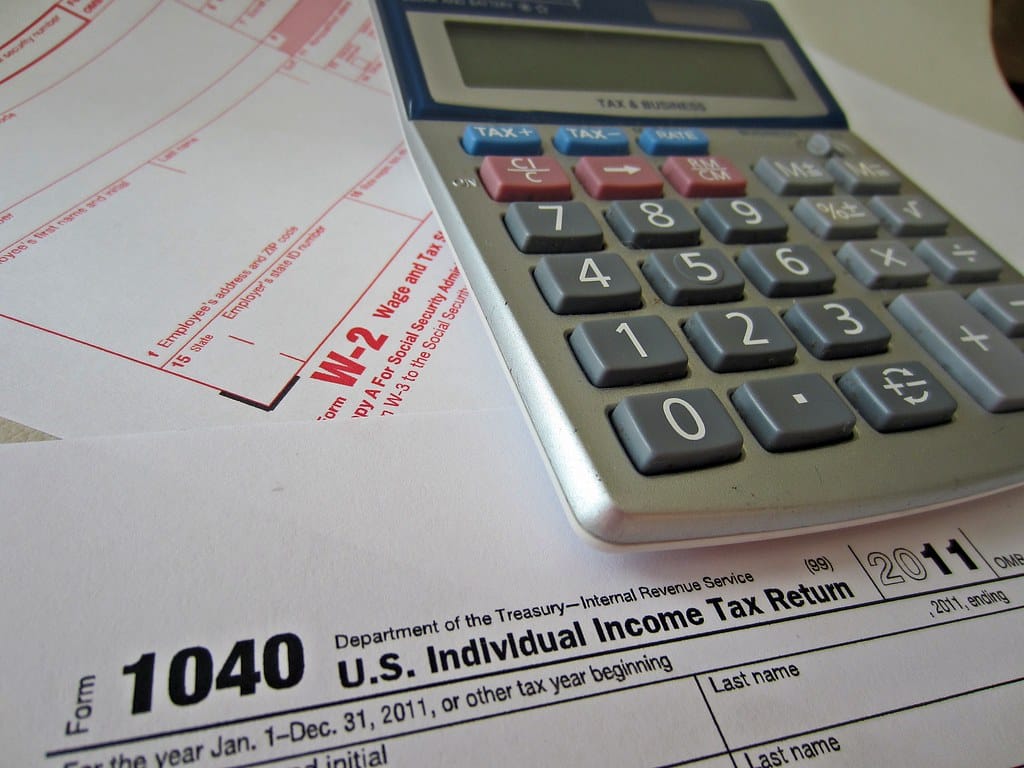
If you are a founder with a product launch, a consulting sprint, or a SaaS deal that lands 80% of your revenue in a single quarter, estimated quarterly tax safe harbor founders 2026 is not a bookkeeping topic — it is an operating cost you can engineer. Sized wrong, quarterly estimates become a working-capital leak: either you drain cash in Q1–Q3 hedging a spike that has not landed yet, or you pay a penalty at filing because you under-remitted during a fat quarter. This post maps the two safe-harbor tests, the annualized income installment method, and the four 2026 deadlines with enough numerical specificity to hand to your spreadsheet — not your CPA.
This article is general information, not professional tax advice. Tax law changes frequently, and individual circumstances vary. Consult a licensed CPA or tax attorney before finalizing your 2026 estimated payment schedule. Last reviewed: June 2026.
- Q1 underpayment penalty rate: 7%
- Q2 underpayment penalty rate: 6%
- SS wage base (2026, projected): ~$184,500 — see note below
- SE tax formula: net income × 0.9235 × 0.153 (up to SS wage base); × 0.029 above it
- Prior-year safe-harbor AGI threshold: $150,000 (100% test) / above $150,000 triggers 110% test
Why Lumpy Revenue Makes Estimated Taxes a Systems Problem
Most estimated-tax guides assume your income arrives like a salary — steady, predictable, easy to divide by four. For self-employed founders, that model is broken. I’ve talked with SaaS operators who run $8K/month through January through September, then close a $120K enterprise deal in November. At the standard “divide last year’s tax by four” heuristic, they’d be writing checks that bear zero relationship to when the cash arrived.
The IRS underpayment penalty is calculated separately per quarter — a Q1 shortfall accrues longer at a higher rate than a Q4 shortfall. For Q1 2026, the underpayment rate was 7% annualized (federal short-term rate + 3 points); Q2 2026 dropped to 6%. These aren’t catastrophic, but they are friction you can eliminate with the right method.
Before modelling any scenario, you need to understand the two escape hatches the IRS provides: the safe-harbor tests and the annualized income installment method. The 2026 tax year also brings legislative changes affecting deduction timelines for pass-through businesses — if you haven’t done a mid-year review of how those affect your deductible expenses, that review is a useful companion to this post.
Estimated Quarterly Tax Safe-Harbor Tests for Founders: 2026 Rules
To avoid the underpayment penalty entirely, your total estimated payments plus withholding must satisfy at least one of these two tests by the time each installment is due:
Test 1 — 90% of Current-Year Tax
Pay at least 90% of the total tax you will owe on your 2026 return. This sounds simple; in practice, it requires you to forecast your full-year income in real time. For founders with a single revenue spike in Q4, this means you often don’t know your liability until December — making the safe harbor retroactive rather than a planning tool.
Test 2 — 100% or 110% of Prior-Year Tax (the “Look-Back” Test)
Pay at least 100% of the tax shown on your 2025 return — or 110% if your 2025 adjusted gross income (AGI) exceeded $150,000 (or $75,000 for married filing separately). This is the threshold that trips up founders who had a breakout year: a $200K AGI in 2025 means your 2026 safe-harbor floor shifts from 100% to 110% of 2025 tax liability.
If your 2025 AGI was > $150,000: your prior-year safe harbor is 110%, not 100%, of 2025 tax. A founder who paid $28,000 in tax in 2025 and had AGI of $175,000 must remit at least $30,800 in 2026 installments to lock the look-back safe harbor.
| Safe-Harbor Test | Trigger Condition | What You Must Pay in 2026 Installments |
|---|---|---|
| 90% Current-Year | Always available | ≥ 90% of your actual 2026 tax liability |
| 100% Prior-Year | 2025 AGI ≤ $150,000 | 100% of tax shown on 2025 return |
| 110% Prior-Year | 2025 AGI > $150,000 | 110% of tax shown on 2025 return |
The look-back test is usually the only reliably plannable option for founders with lumpy income, because you know last year’s tax liability with precision. Divide it by four and pre-schedule the payments.
The SE Tax Component You Must Include in Every Estimate
Estimated payments cover all federal tax: income tax plus self-employment (SE) tax. This is where many founders under-withhold.
SE tax works as follows for 2026: you multiply your net self-employment earnings by 92.35% (because the IRS lets you exclude the “employer” half of FICA as a notional cost), then apply 15.3% to that figure — 12.4% Social Security (capped at the first ~$184,500 of net earnings; see note) plus 2.9% Medicare (no cap). You also get to deduct the employer-equivalent half (7.65%) when computing your AGI.
Important note on the 2026 Social Security wage base: The figure of $184,500 used in the table below is a projection based on the SSA’s standard cost-of-living adjustment methodology (2025 base was $176,100). The IRS and SSA typically confirm the new year’s wage base in an SSA Notice published in October of the prior year. If you are reading this after October 2026, verify the confirmed figure at SSA.gov/oact/cola/cbb.html before sizing your estimates — using the wrong cap could cause a modest over- or under-payment.
Example: net self-employment income of $120,000 → taxable SE base = $120,000 × 0.9235 = $110,820 → SE tax = $110,820 × 0.153 = $16,955. That figure lives inside your quarterly estimates alongside your income tax. Founders who only model income tax are chronically short on every payment.
| Net SE Income | × 92.35% | SE Tax @ 15.3% | AGI Deduction (½ SE) |
|---|---|---|---|
| $60,000 | $55,410 | $8,478 | $4,239 |
| $120,000 | $110,820 | $16,955 | $8,478 |
| $200,000 | $184,500 (SS cap, projected) | $28,202 SS + $450 Medicare on excess = $28,651 | $14,326 |
Note: at $200K net SE income, only ~$184,500 (projected 2026 SS wage base) is subject to the 12.4% Social Security component; the remaining ~$15,500 still incurs the 2.9% Medicare rate. The 15.3% flat-rate formula only applies below the SS wage base cap.
If your net SE income will exceed $200,000 (single) or $250,000 (married filing jointly), add 0.9% on the excess to each quarterly estimate. Unlike the base SE tax, there is no employer-half deduction for this additional tax — include the full 0.9% in your payment. For a founder crossing $200K mid-year, the practical approach is to build the 0.9% into your Q3 and Q4 installments once cumulative net SE income passes the threshold. If your income is lumpy and you expect to cross $200K only in a Q4 deal, include a lump estimate in the January 15 payment and note it on Schedule AI.
The 2026 Payment Deadlines
The four installment due dates for 2026 income are:
- April 15, 2026 — Q1 (January–March income)
- June 16, 2026 — Q2 (April–May income; June 15 is a Sunday, so the deadline shifts to Monday)
- September 15, 2026 — Q3 (June–August income)
- January 15, 2027 — Q4 (September–December income)
Note: if you file your 2026 return and pay any balance due by January 31, 2027, the IRS waives the Q4 estimated payment. For founders who close their books quickly, this is a useful float play.
The Annualized Income Installment Method for Founders With Back-Loaded Revenue
If your income genuinely skews toward Q4 — a product launch, an annual consulting retainer paid in lump sum, or a SaaS deal that closes in November — the standard equal-installment approach will overpay in Q1–Q3 and potentially still under-pay Q4. The annualized income installment method on Form 2210, Schedule AI is the IRS’s own remedy.
How Schedule AI Works
Instead of dividing annual income evenly, Schedule AI calculates each installment based on the actual cumulative income earned through that quarter’s cutoff, then annualizes it to project a full-year liability, then applies the installment fraction for that period. The cumulative cutoff dates and annualization multipliers are:
| Installment | Cumulative Income Through | Annualization Factor | Installment Fraction of Annualized Tax |
|---|---|---|---|
| 1st (Apr 15) | March 31 | 4 | 22.5% |
| 2nd (Jun 16) | May 31 | 2.4 | 45% |
| 3rd (Sep 15) | August 31 | 1.5 | 67.5% |
| 4th (Jan 15) | December 31 | 1 | 90% |
Worked Example: The Founder Who Earns 80% in Q4
Consider a consulting founder with projected 2026 net SE income of $150,000, distributed as follows: $7,500 (Q1), $7,500 (Q2), $15,000 (Q3), $120,000 (Q4). Under the standard equal-installment method with no prior-year data, they’d owe large checks in April, June, and September before earning the income that generates the liability.
Under Schedule AI, here is the full arithmetic for all four installments:
- April 15 (Q1): Cumulative income through March 31 = $7,500. Annualized: $7,500 × 4 = $30,000. Tax on $30,000 ≈ $4,500 income tax + $4,238 SE tax = $8,738 estimated annual tax. 22.5% installment = ~$1,966. Q1 payment: $1,966.
- June 16 (Q2): Cumulative through May 31 = $15,000 (Q1 $7,500 + Q2 $7,500). Annualized: $15,000 × 2.4 = $36,000. Tax on $36,000 ≈ $5,400 income tax + $5,086 SE tax = $10,486 estimated annual tax. 45% of $10,486 = $4,719; subtract Q1 payment of $1,966 = $2,753. Q2 payment: $2,753.
- September 15 (Q3): Cumulative through August 31 = $30,000 ($7,500 + $7,500 + $15,000). Annualized: $30,000 × 1.5 = $45,000. Tax on $45,000 ≈ $6,750 income tax + $6,357 SE tax = $13,107 estimated annual tax. 67.5% of $13,107 = $8,847; subtract prior payments of $4,719 = $4,128. Q3 payment: $4,128.
- January 15 (Q4): Full-year income = $150,000. Total tax ≈ $22,500 income tax + $21,194 SE tax = $43,694 actual annual tax. 90% installment floor = $39,325; subtract prior payments ($8,847) = $30,478. Q4 payment: $30,478 (covers the big Q4 deal at the time cash arrived). Any remaining balance clears at the April 2027 filing.
The result: total installments paid = $1,966 + $2,753 + $4,128 + $30,478 = ~$39,325, versus the equal-split method that would have demanded ~$10,900 per quarter starting April 15 — before the big deal closed. No underpayment penalty, and the cash stayed in the business until Q4. You must file Form 2210 with Schedule AI checked (Box C, Part II) with your 2026 return to document the calculation. Failure to file Form 2210 when using this method forfeits the protection.
Once you elect the annualized income installment method for 2026, you must apply it to all four installments for the year. You can revert to the standard method in 2027. This isn’t a quarter-by-quarter toggle — it’s a whole-year operating decision.
Which Method Should a Founder Use?
The look-back safe harbor (Test 2) is the lowest-overhead approach if your 2025 liability is known and your 2026 income is likely to be at least as high. You pay a fixed amount each quarter — like a subscription — and let the annualized reality settle at filing. If you had a thin 2025 and expect a breakout 2026, Test 2 produces an artificially low floor and could leave you with a large catch-up bill in April 2027.
The annualized method (Schedule AI) is for founders whose income is genuinely lumpy and who want payments to track actual cash flows. It requires real-time bookkeeping through each quarter-close date and a CPA comfortable with Form 2210 AI. The payoff is cash-flow efficiency: you don’t prepay tax on income you haven’t received.
For founders thinking about structural levers — specifically whether an S-corp election reduces SE tax enough to justify the payroll complexity — the SE tax calculation in this post is the baseline number you’d use to model the breakeven. An S-corp salary split shifts some of that 15.3% SE tax to employer/employee FICA, but the threshold math depends on your net income level. Similarly, your choice of entity structure affects which income flows through Schedule SE at all.
If you’re managing income across a two-income household with one founder and one W-2 earner, the W-2 withholding often satisfies part of the estimated tax obligation — that interplay deserves its own system design, and founders navigating ACA premiums alongside variable income will find the income-lever logic in our ACA subsidy cliff post directly relevant to sizing both.
Building the Estimated Tax Process Into Your Operating System
I treat estimated taxes the same way I treat server costs or SaaS subscriptions: a fixed infrastructure expense that runs on autopilot until something in the underlying model changes. Here is the process I run:
- Close each quarter’s books by the 5th of the following month. For SE founders using Schedule AI, you need cumulative income numbers before each installment due date — not estimates, actuals. If your books lag (no bookkeeper yet, reconciliation delays), use bank-statement revenue as a conservative proxy for Q1–Q3 Schedule AI calculations; reconcile the gap at year-end before filing Form 2210.
- Maintain a tax escrow account. Route 25–30% of every revenue deposit into a separate high-yield savings account. This is not profit; it is a liability already on the balance sheet.
- Run the safe-harbor calculation in January. Pull your 2025 return, note the total tax, note the AGI. If AGI > $150,000, multiply total tax by 1.1 and divide by 4 — that’s your quarterly floor under the look-back test.
- Decide by March 31 whether to use Schedule AI. If you know Q4 will dominate your revenue, make the call before the April 15 first installment. Switching mid-year is not how this method is designed.
- Calendar all four deadlines now: Apr 15, Jun 16, Sep 15, Jan 15 2027.
If 2026 legislative changes affected your deductible expenses — especially around depreciation or pass-through deduction phase-outs — revisit your prior-year tax number before locking the safe-harbor floor. Changes to the 199A deduction or bonus depreciation rules shift your net taxable income and therefore your installment math.
Frequently Asked Questions
What is the estimated tax safe harbor rule for self-employed founders?
The safe harbor rule says you avoid any underpayment penalty if your total estimated payments (plus withholding) meet one of three thresholds: (1) at least 90% of your current-year tax liability, (2) 100% of last year’s total tax if your prior-year AGI was $150,000 or below, or (3) 110% of last year’s total tax if your prior-year AGI exceeded $150,000. For most founders with variable income, the 100%/110% look-back test is the most practical, since it requires no real-time income forecasting.
How do I calculate quarterly estimated taxes with variable income?
Three-step formula: (1) Multiply your net SE income by 0.9235 × 0.153 to get SE tax (for income below the ~$184,500 projected SS wage base); add your estimated income tax at your marginal rate to get total annual tax. (2) If using the look-back safe harbor: divide prior-year total tax by 4 (multiply by 1.1 first if 2025 AGI exceeded $150,000). (3) If using Schedule AI for back-loaded income: use the annualization factors in the table above — multiply cumulative-to-date income by the period factor, compute tax on that annualized figure, then apply the installment fraction and subtract prior payments.
Can I use the annualized income method if I also have W-2 income from a part-time employer or spouse?
Yes. Schedule AI applies only to your self-employment income component. W-2 withholding from any source still counts toward your total prepayments and can offset what you owe in estimated installments. The complication is that W-2 withholding is treated as paid evenly across four quarters (regardless of when it was actually withheld), so it reduces each quarter’s required installment equally. Your CPA needs to factor both streams into the Form 2210 Schedule AI worksheet to get the right number for each due date.
What happens if I miss a quarterly deadline by a few days?
The underpayment penalty accrues from the due date until the date paid (or the return due date, whichever is earlier). A short delay — say, five days on a $5,000 payment — costs roughly $5,000 × 7% ÷ 365 × 5 ≈ $4.79. That is not worth losing sleep over. The penalty becomes material when an entire quarter’s installment is missed or significantly under-paid, because the accrual runs for the full quarter. Q1 underpayments (due April 15) have the longest accrual window: they run until the April 15, 2027 return due date if never corrected.
Does paying the prior-year safe-harbor amount guarantee no penalty even if I owe $50,000 at filing?
Yes — that is precisely the point of the safe-harbor test. If your 2025 AGI was $130,000 and your 2025 total tax was $22,000, you need to remit $22,000 in 2026 installments (100% look-back). If your 2026 liability turns out to be $80,000, you will owe $58,000 at filing — but you will owe zero underpayment penalty. The safe harbor eliminates the penalty, not the tax bill. Plan your April 2027 cash position accordingly.
Conclusion: Estimated Quarterly Tax Safe Harbor as a Capital Efficiency Decision
For founders with variable self-employment income, estimated quarterly tax safe harbor founders 2026 is one of the most direct levers for keeping working capital in the business until it is actually owed to the IRS. The two safe-harbor tests give you a penalty-free floor; Schedule AI gives you the machinery to align payments with cash flows when those flows are heavily skewed toward one quarter. The 2026 penalty rates — 7% in Q1, 6% in Q2 — are meaningful over a full year of accrual, but they are entirely avoidable with a documented, repeatable process.
The next concrete step: pull your 2025 return, note total tax and AGI, and run the look-back calculation before April 15. If you suspect Q4 will dominate your 2026 revenue, flag that conversation with your CPA now — not in December — so you have time to prepare Form 2210 Schedule AI correctly. The system works; it just requires setting it up before the first installment is due.
Rafael Negreiros is a tax strategist and financial writer who covers self-employment tax structures, retirement accounts, and entity planning for independent founders. Rafael has worked closely with CPA practices serving solo founders and SaaS operators, translating IRS guidance and Form instructions into actionable operational systems. The content on this page has been reviewed for accuracy against IRS Publication 505 (Tax Withholding and Estimated Tax), Form 2210 instructions, and SSA wage base announcements. This article is general educational information — consult a licensed CPA or enrolled agent for advice specific to your situation.
Keep reading

Can a Non-Coder Actually Ship With Cursor? A Developer’s Honest Test
Cursor is not no-code. Here is what a non-technical founder can realistically ship in weeks — and when you still...
Self-Hosting n8n: The Real Cost vs Cloud (and the 6 hrs/week DevOps Tax)
A founder-facing TCO teardown of n8n Cloud vs self-hosted infra — including the DevOps hours nobody puts in the spreadsheet.

reMarkable vs Boox vs Kindle Scribe: Which One Actually Replaces the Note Vault You Abandoned?
An honest, spec-and-review-based comparison of reMarkable, Boox, and Kindle Scribe for anyone who quit Obsidian or Notion and wants notes...

6 Books That Actually Changed How I Run a One-Person Business (2026)
Not a top-20 listicle. Six books I actually read and applied while running a one-person AI business, and the one...

Do Phone Lock Boxes Actually Work for Founder Focus? The Commitment-Device Case
A clear-eyed look at whether phone lock boxes help a one-person founder focus — grounded in commitment-device research, with free...
The ‘Second Brain’ is Over: Why You Need a Second Executioner
Stop hoarding notes and start shipping. Discover why the Second Brain fails and how the Second Executioner model uses Personal...
You've reached the end — no more posts to load.
No comments yet — be the first to share your thoughts.