

Inflation & Tariff-Aware Pricing for Small Operators in 2026
With 2026 tariffs adding 5–25% to COGS for physical and imported-component businesses, small operators who don't reprice strategically will see margins collapse — here's a four-step framework to fix that.

General information only. This post is not professional pricing, legal, or financial advice. Consult a qualified advisor before making material changes to your business model or tax position.
Last reviewed: June 2026. Section 301 rates are under active executive review; verify your specific HTS codes at hts.usitc.gov before acting on any rate shown here.
If you are a small operator asking how to raise prices inflation tariffs small business 2026, the answer is not “raise everything 10% and send an apology email.” The answer is a four-step system: calculate your real tariff exposure, benchmark competitor price floors, choose the right repricing cadence, and communicate increases without torching customer relationships. According to NAHB and Census Bureau manufacturing data, the custom furniture and home goods sector saw gross margin compression of 9–13 points between Q4 2024 and Q2 2026 for importers sourcing from China — not because those operators were running bad businesses, but because COGS moved and prices didn’t.
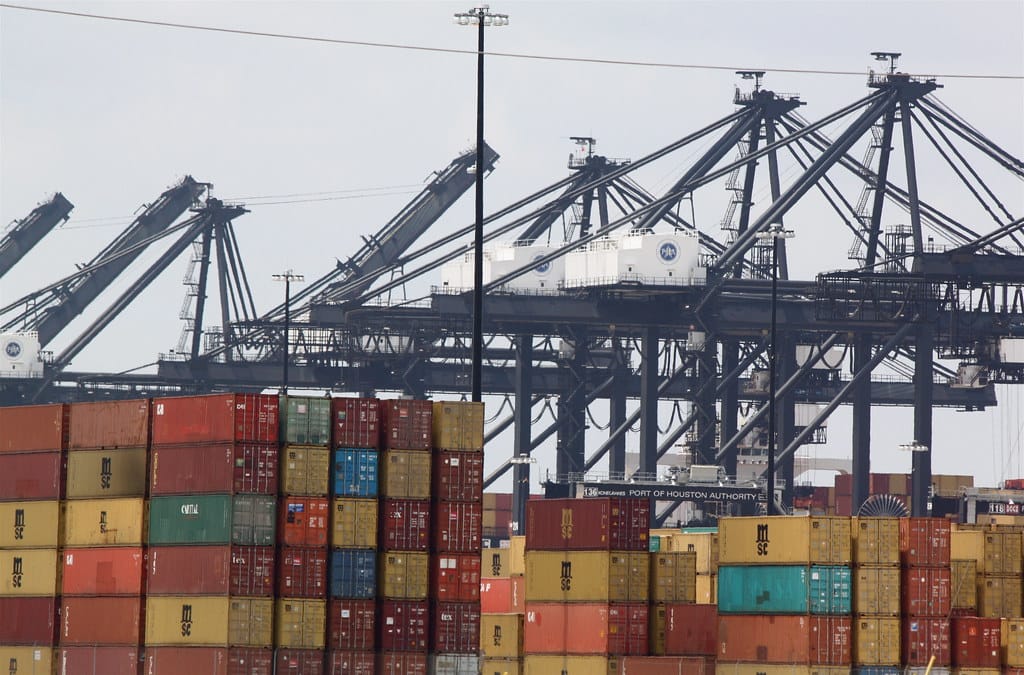
The macro context matters here. According to the Tax Foundation’s 2026 Tariff Tracker, the effective US tariff rate hit 7.7% in 2025, up from 2.4% in 2024 — a tripling in the tax burden on imported goods in a single year. Section 301 China tariffs stack on top of base MFN rates, meaning many consumer and industrial goods now carry cumulative effective tariffs of 35%+. Section 232 steel and aluminum duties sit at 25% base, with derivatives and downstream products potentially carrying additional duties depending on classification. A 25% tariff on a product line with 40% gross margin can wipe out 6–10 margin points overnight. Most large retailers can absorb that across hundreds of SKUs. You, running a $500k/year product business, cannot.
How to Raise Prices for Inflation and Tariffs: A 2026 Guide for Small Businesses
This framework covers both product and service businesses — because the pricing levers differ fundamentally. Product operators face direct tariff drag on COGS; service operators face indirect tariff pass-through from suppliers and materials inflation. Both need repricing discipline, but the tools are different.
Step 1: Calculate Your True Tariff Exposure
Before you change a single price, you need a number — your blended tariff drag on COGS. This is not the same as “we import from China so we pay 25%.” Tariffs stack, vary by HTS code, and interact with your sourcing geography in ways that require line-item work.
The Tariff Drag Formula
Tariff Drag Formula:
Tariff Drag on COGS (%) = Σ (Line-Item COGS × Applicable Tariff Rate) ÷ Total COGSLook up your specific HTS codes at hts.usitc.gov — your freight forwarder should already have these on file.
The Tariff Exposure Worksheet
Pull your last 12 months of supplier invoices. For each line item, identify: (1) country of origin, (2) HTS code, (3) the applicable tariff rate. Then populate this worksheet — one row per significant SKU or input category:
| SKU / Input | Country of Origin | HTS Code | Unit COGS ($) | Tariff Rate (%) | Tariff $ Impact |
|---|---|---|---|---|---|
| Example: Ceramic base | China | 6912.00.4810 | $8.40 | 32.5% | $2.73 |
| _________ | _________ | _________ | _________ | _________ | $_____ |
| _________ | _________ | _________ | _________ | _________ | $_____ |
| _________ | _________ | _________ | _________ | _________ | $_____ |
| Total Tariff $ Impact ÷ Total COGS = Tariff Drag % | ______% | ||||
Here is what the current tariff landscape looks like by sourcing origin and category, based on 2026 US import tariff schedules and the USTR Section 301 tariff actions:
| Sourcing Origin / Category | Base MFN Rate | Additional Duty | Effective Cumulative Rate |
|---|---|---|---|
| China — consumer goods (Sec. 301 Lists 1–3) | 2–7% | +25% (Sec. 301) + 10% (Executive Order additional duty, Feb 2025 — Fed. Register) | ~37–42% |
| China — steel/aluminum components | 0–3% | +25% (Sec. 301) + 25% (Sec. 232) | ~50–53% |
| China — solar, batteries, semiconductors | 0–3% | +25–50% (Sec. 301) | ~25–53% |
| Mexico / Canada (USMCA-qualifying) * | 0% | $0 (if rules of origin met) | 0% |
| Other countries — steel/aluminum | 0–5% | +25% base (Sec. 232; Commerce Dept.) | ~25–30% |
| Domestic US sourcing | N/A | No tariff; subject to domestic inflation | 0% tariff drag |
* USMCA 0% requires a verified Certificate of Origin and that goods meet USMCA rules-of-origin criteria. Goods that fail the rules-of-origin test revert to MFN rates plus any applicable Section 232 duties. Steel and aluminum components sourced through Mexico or Canada are still subject to Section 232 (25% base) unless country-specific exemptions apply — a Mexican intermediary does not automatically confer USMCA treatment. See the USTR USMCA resources page for rules-of-origin guidance. Sources: USTR Section 301 tariff actions; Tax Foundation 2026 Tariff Tracker; Drip Capital 2026 import tariff guide. Verify your specific HTS codes at hts.usitc.gov.
Once you have your blended tariff drag, you know the floor of your required price increase before you address general inflation. For a $500k/year product business sourcing 60% of COGS from China (consumer goods), a 40% effective tariff on that 60% slice means tariffs add roughly 24 points of burden to that imported portion. If imported COGS was 35% of revenue, that 24% tariff on that 35% = an 8.4-point COGS increase as a percentage of revenue. That is not recoverable through “operational efficiency.”
Step 2: Benchmark Competitor Price Floors
Your tariff exposure worksheet tells you what you need to charge. The competitive landscape tells you what you can charge. The goal of this step is identifying the market’s effective price floor — the lowest price at which your category is being sold by a solvent business — so you can reprice above cost without pricing yourself into irrelevance.
For small operators, the benchmark method I use is straightforward:
- Identify 3–5 direct competitors who appear to be healthy (running ads, stocking inventory, not clearance-pricing). These are likely also absorbing tariff cost pressure.
- Map their price per unit or per service tier. Track this monthly — not annually. Prices are moving fast in 2026.
- Calculate the market’s implied minimum viable margin. If the lowest price in your category is X and median COGS (tariff-adjusted) is Y, the floor gross margin is (X–Y)/X. If that floor margin is below 30%, the category has pricing power problems and you need to differentiate or exit segments, not just reprice.
- Position your price 5–15% above the floor and justify the gap with specificity: faster lead times, US-sourced components, better warranty, direct support. That gap is where your margin lives.
A 2025 survey by Nav found that 67% of small business owners reported direct tariff impact in the prior 12 months — which means the majority of your competitors are in the same cost bind. When everyone’s COGS rises, the entire market’s price floor rises. That is actually an opportunity: if you reprice before your competitors, you don’t look expensive — you look ahead of the curve, especially if you communicate the rationale clearly.
Step 3: Choose the Right Repricing Cadence
There are two viable repricing cadences for small operators in a tariff-volatile environment. Choosing wrong costs you margin or customers — sometimes both.
Quarterly Scheduled Repricing
Best for: stable product lines, subscription services, service retainers, or any business where prices change infrequently and customers expect predictability.
How it works: Set a fixed repricing review date each quarter (we use the 15th of the month following quarter-end). Review your tariff exposure, supplier invoices, and competitor floors. If the required increase is ≥2%, reprice. Communicate 45 days in advance. This creates a predictable rhythm customers can plan around — and it keeps you from the “death by a thousand tiny increases” trap.
Trigger-Based Repricing
Best for: businesses with highly volatile imported COGS, project-based service businesses, or operators using just-in-time inventory.
How it works: Define two threshold triggers in advance and document them in your pricing policy (internal document): (1) a cost trigger — any supplier invoice that implies a COGS increase ≥5% on that line; (2) a policy trigger — any new tariff rule taking effect within 90 days that materially affects your HTS codes. When either fires, you run an emergency reprice cycle with 30 days’ customer notice.
The advantage of trigger-based repricing is speed. When tariffs moved in early 2026, operators on a quarterly cadence absorbed one full quarter of margin compression before their next scheduled review. Trigger-based operators repriced within 30 days. On a $500k/year product business with 38% gross margin, one quarter of absorbing an 8-point COGS increase costs roughly $10,000 in lost margin. That is the real cost of cadence mismatch.
Which Cadence Fits Your Business?
| Business Factor | Quarterly Repricing | Trigger-Based Repricing |
|---|---|---|
| Business type | Retail product, SaaS, retainer service | Project-based, JIT product, contractor |
| Inventory model | Batch-ordered, planned stock | Just-in-time, on-demand purchasing |
| Customer relationship length | Long-term / recurring | Project-by-project / transactional |
| COGS volatility | Low to moderate | High / tariff-sensitive |
| Use this cadence when… | Predictability matters more than speed | Absorbing even one quarter of COGS shock is painful |
Worked Examples: $500k Product Business vs. $200k Service Businesses
Worked Example A: $500k/Year Physical Product Business
- Revenue: $500,000/year
- COGS (pre-tariff): $280,000 (56% COGS ratio)
- Gross margin (pre-tariff): 44%
- China-sourced COGS: $168,000 (60% of total COGS)
- Applicable tariff rate (consumer goods, Sec. 301 + Executive Order additional duty): ~40%
- Tariff-added COGS: $67,200/year
- New total COGS (tariff-adjusted): $347,200
- New gross margin (no reprice): 30.6% — a 13.4-point compression
- Required price increase to restore 44% GM: ~23.9%
- Recommended approach: Increase prices 12–15% immediately (recover ~60% of tariff drag); shift 20% of sourcing to USMCA-qualifying suppliers over 12 months; target full margin restoration by Q1 2027
Worked Example B: $200k/Year Project-Based Service Business (Materials Exposure)
- Revenue: $200,000/year
- Direct costs (materials, tools, subcontractors): $80,000 (40% COGS ratio)
- Gross margin (pre-inflation): 60%
- Inflation-exposed supply costs: $32,000 (40% of direct costs — specialty hardware, consumables)
- Supplier price increase (CPI + tariff pass-through): 18% on exposed materials
- Added supply cost: $5,760/year
- New gross margin (no reprice): 57.1%
- Required price increase to hold 60% GM: ~2.9%
- Recommended approach: Trigger-based repricing tied to supplier invoices; add a “materials tariff adjustment” line item on project quotes (rather than embedding in base rates) to keep base rates visible for competitive comparisons and signal transparency. Include a 30-day quote expiration clause: “Materials surcharges are subject to revision after 30 days due to tariff volatility.”
Worked Example C: $180k/Year Retainer or Hourly Service Business (No Materials COGS)
- Profile: HVAC technician or electrical contractor billing retainer/hourly; refrigerant and component costs rose 20% from tariff pass-through
- Revenue: $180,000/year
- Parts and consumables spend: $28,000/year (15.6% of revenue)
- Labor and overhead: $95,000
- Net margin (pre-increase): ~31.6%
- Tariff-driven parts cost increase: +$5,600/year
- Problem type: This is a simpler problem than Example A — purely a rate card update, not a structural sourcing problem
- Recommended approach: Update rate card annually using quarterly CPI + parts invoice data. Unlike project businesses, a retainer/hourly service business should embed cost increases into the base rate — there is no “project” to attach a surcharge to. Frame it as an annual rate adjustment, not an emergency response
- Service businesses with zero materials COGS (pure-labor consulting, coaching, SaaS) are not tariff-affected directly — their repricing is driven solely by labor inflation and market rates, which is a different, simpler calculus
The key difference between product and service operators: the product operator needs a structural price increase, communicated proactively. The service operator needs a variable surcharge or rate card mechanism that flexes with materials costs — baking it into the base rate obscures the reason and makes future adjustments look arbitrary. The HVAC or electrical contractor on a retainer has a different, simpler problem: a periodic rate card update that reflects parts inflation, not a tariff worksheet exercise.
I cover the broader tax implications of structuring operator income in the post on the OBBBA mid-year tax audit moves every solo founder should make.
Step 4: Communicate Increases Without Losing Customers
Pricing psychology research is clear: customers accept price increases more readily when they understand the external cause, feel respected in the communication, and are given advance notice. The goal is not to apologize — it is to be honest and specific. “Our rates are going up because we feel like it” loses customers. “Our suppliers’ costs increased 18–22% due to 2026 tariff adjustments on imported steel components, and we’re passing through a portion of that” retains them.
The Four-Part Increase Notice
- Specific cause, not vague inflation language. Name the tariff schedule. “Section 301 duties on the components we source from China increased our COGS by X%” is more credible than “rising costs.” Specificity signals honesty. Customers are reading the same news you are.
- Timeline: 30–45 days’ notice minimum. This lets customers adjust budgets and eliminates the feeling of ambush. For annual contracts, give 60 days — enough time for their own budget cycle.
- Quantify the increase clearly. “$X per unit” or “our monthly retainer moves from $Y to $Z” is cleaner than percentage-only communications. People don’t do math under stress.
- Acknowledge loyalty without offering a blanket discount. “We value the relationship and have absorbed cost increases for as long as we responsibly could” is honest. Do not reflexively offer a 10% discount to avoid conflict — that teaches customers that pushing back gets results.
Price Increase Letter Template
Template: Price Increase Notice (adapt for your business)
Subject: [Business Name] Pricing Update Effective [Date]
Hi [Customer Name],
I’m writing to let you know that effective [DATE — 30–45 days out], our [product/service] pricing will increase from [CURRENT] to [NEW].
The reason is direct: Section 301 tariffs on imported [MATERIALS/COMPONENTS] increased our per-unit cost by approximately [X]% over the past [6/12] months. We held prices as long as we responsibly could, but continued absorption would put us in an unsustainable position.
We’ve chosen to pass through roughly [60–70%] of the cost increase rather than the full amount — [we / your business] is absorbing the rest.
Thank you for the relationship. If you have questions, I’m available at [CONTACT].
[Name]
One tactical note for service businesses specifically: project quotes issued during a tariff-volatile period should include an explicit expiration clause — “this quote is valid for 30 days; materials surcharges are subject to revision after that date.” This is standard practice in construction and fabrication and should be standard in any service business with significant materials exposure.
Understanding the broader macro backdrop — not just tariffs but the recession signals your customers and suppliers are responding to — strengthens your pricing position. The post on recession signals that matter more than headlines is worth reading alongside this framework, because a softening demand environment changes how aggressively you can push price increases through.
Sourcing Diversification as the Long Game
Repricing buys time. Sourcing diversification changes the underlying equation. USMCA-qualifying goods from Mexico and Canada carry 0% tariffs where rules of origin are met — a structural advantage over China-origin supply chains that is now priced into landed cost comparisons. Businesses that shifted even 20–30% of their China-sourced supply to USMCA-qualifying alternatives in 2025 have seen meaningful reductions in their blended tariff exposure by mid-2026, according to tracking from Avalara’s 2026 tariff guide.
The process for small operators:
- Identify your top 3 COGS line items by tariff dollar exposure (not by volume)
- Request USMCA Certificate of Origin from existing suppliers — some China-origin suppliers have Mexico-based manufacturing operations that qualify — but verify rules-of-origin compliance, not just the supplier’s location
- Build 90-day supplier lead time into your sourcing switch — do not cut existing suppliers until the new supply chain is tested
- Track tariff savings quarterly and compare against any unit cost premium from the new source
This is a 12–18 month project, not a quarter. But operators who start it now will have a structural cost advantage over competitors who keep absorbing tariff drag and hoping for policy reversal. Running leaner on the cost side — auditing every subscription, tool, and contractor line alongside supplier costs — compounds the effect. The framework I use for that audit is covered in the post on how founders audit SaaS subscriptions and cut software costs.
About the Author
Rafael Negreiros
Rafael has spent several years working alongside small product and service operators on COGS management, supply chain restructuring, and pricing strategy in tariff-volatile environments. He has directly worked through the HTS classification and landed cost analysis process with importers sourcing from China, Mexico, and Vietnam — including operators navigating the Section 301 List 3 and List 4A increases and the 2025 executive order additional duties. His focus at Bright Curios is translating macro policy changes into ground-level financial decisions for founders and operators with under $2M in revenue.
FAQ: Repricing Under Tariff Pressure
How do I find my HTS code to verify my tariff rate?
Use the official HTS lookup tool at hts.usitc.gov — this is the authoritative source maintained by the US International Trade Commission. You can search by product description or browse by chapter. Your freight forwarder or customs broker should also have the HTS codes on every commercial invoice and entry summary (CBP Form 7501). If you are unsure whether your code is correct, a licensed customs broker can provide a binding ruling through CBP — this matters when the difference between two adjacent HTS codes means a 7.5% vs. 25% tariff rate.
How much should I raise prices to cover a 25% tariff increase on my China-sourced components?
It depends on what percentage of your COGS is tariff-exposed. If China-sourced components represent 50% of your total COGS, and your gross margin was 45% pre-tariff, a 25% tariff on that 50% slice adds roughly 12.5 points to your COGS ratio. To restore your original gross margin, your required price increase is approximately 18–22%, depending on your specific cost structure. Run the tariff exposure worksheet in Step 1 before picking a number — every business is different, and the math is not complex but it is necessary. This is general information, not professional pricing advice; your specific HTS codes and supplier mix will change these numbers.
Can I legally pass tariff costs to customers?
Yes — there is no legal restriction on passing tariff-related cost increases to customers as part of normal pricing. Tariffs are a cost of goods, like any other input cost. The practical consideration is contractual: if you have fixed-price contracts or service agreements, check whether they include a force majeure, material cost escalation, or tariff adjustment clause. If not, you may need to negotiate amendments or wait until contract renewal. Going forward, include explicit tariff adjustment language in any multi-month or multi-year contracts. This is general information; have a contracts attorney review specific agreement language.
What is the USMCA rules-of-origin test, and why does it matter?
USMCA’s rules-of-origin test determines whether a product sourced from Mexico or Canada qualifies for 0% tariff treatment. The test varies by product type but generally requires that a product either wholly originates in a USMCA country or undergoes sufficient transformation there (measured by tariff classification change, regional value content, or specific manufacturing processes). The critical point for small operators: a product assembled or finished in Mexico using Chinese-origin components may not qualify — the Chinese content can disqualify the goods from USMCA treatment. Always request and verify the Certificate of Origin from your supplier, not just the country of export. The USTR USMCA resources page has product-specific guidance.
Should I add a tariff surcharge line item or just raise my base price?
For service businesses and project-based work: a named surcharge (“materials tariff adjustment”) is preferable because it signals transparency, makes future adjustments easier to explain, and keeps your base rate visible for competitive comparisons. For product businesses with shelf pricing or e-commerce: embed it in the base price. Customers making purchase decisions don’t want to parse surcharge line items at checkout — it creates friction and erodes trust. The surcharge approach works when you have an ongoing service relationship; the embedded approach works for transactional product sales.
What if my competitors aren’t raising prices yet?
Two explanations: they have lower tariff exposure than you (different sourcing geography or HTS codes), or they are absorbing the cost into margin and will either reprice later or run into cash flow problems. If it is the latter, competing on price against a business that is subsidizing customers with its own margin is a race you do not want to win. According to NFIB’s 2025 Small Business Economic Trends survey, a record-high share of small businesses reported raising selling prices due to input cost increases — the repricing wave is real and widespread. Differentiate on lead time, quality, support, and domestic sourcing, and let the math work.
How long will tariffs last? Should I build my pricing on a policy that might change?
This is the right question and the honest answer is: nobody knows. Section 301 tariffs have been in place since 2018 and have survived two administrations. The executive order additional duties imposed in early 2025 are under ongoing review. The practical approach for small operators is to reprice based on current costs, not predicted costs — build your pricing on what you’re actually paying today, and build in a mechanism (quarterly review or trigger-based repricing) to adjust in either direction. If tariffs are reduced, you have an opportunity to restore competitiveness. If they rise further, you’re already in the habit of adjusting. Do not make multi-year strategic decisions based on a tariff rate staying constant.
How do I write a price increase letter that doesn’t lose customers?
The template above covers the full structure. The key principles: be specific about the external cause (name the tariff schedule, not just “rising costs”), give 30–45 days’ notice, state the new price in dollar terms (not just percentage), and acknowledge the relationship without offering a reflexive discount. Customers in 2026 are reading the same tariff news you are — a factual, honest explanation lands better than a corporate form letter. If you have a small number of high-value clients, a direct phone or video call before the written notice builds more trust than the letter alone.
The Next Step
If you are serious about knowing how to raise prices inflation tariffs small business 2026, the first 90 minutes of work is the tariff exposure worksheet. Pull your invoices, identify your HTS codes using hts.usitc.gov, and calculate your blended tariff drag on COGS. That number tells you whether you have a 3% problem or a 20% problem — and those two problems require very different responses. Everything else in this framework follows from that number.
Price increases are not apologies. They are an honest reflection of the cost of doing business in an environment where policy has materially changed the landed cost of goods. Operators who reprice methodically, communicate transparently, and use the tariff environment to accelerate sourcing diversification will exit this period with stronger margins and more defensible cost structures than they had going in.
General information only. This content is not professional pricing, legal, tax, or financial advice. Tariff rates are subject to change; verify current rates for your specific HTS codes via the USTR or a licensed customs broker before making business decisions.
Keep reading

Can a Non-Coder Actually Ship With Cursor? A Developer’s Honest Test
Cursor is not no-code. Here is what a non-technical founder can realistically ship in weeks — and when you still...

Self-Hosting n8n: The Real Cost vs Cloud (and the 6 hrs/week DevOps Tax)
A founder-facing TCO teardown of n8n Cloud vs self-hosted infra — including the DevOps hours nobody puts in the spreadsheet.

reMarkable vs Boox vs Kindle Scribe: Which One Actually Replaces the Note Vault You Abandoned?
An honest, spec-and-review-based comparison of reMarkable, Boox, and Kindle Scribe for anyone who quit Obsidian or Notion and wants notes...

6 Books That Actually Changed How I Run a One-Person Business (2026)
Not a top-20 listicle. Six books I actually read and applied while running a one-person AI business, and the one...

Do Phone Lock Boxes Actually Work for Founder Focus? The Commitment-Device Case
A clear-eyed look at whether phone lock boxes help a one-person founder focus — grounded in commitment-device research, with free...
The ‘Second Brain’ is Over: Why You Need a Second Executioner
Stop hoarding notes and start shipping. Discover why the Second Brain fails and how the Second Executioner model uses Personal...
You've reached the end — no more posts to load.
No comments yet — be the first to share your thoughts.