

The ‘Second Brain’ is Over: Why You Need a Second Executioner
Stop hoarding notes and start shipping. Discover why the Second Brain fails and how the Second Executioner model uses Personal Execution Management to boost output.

You have thousands of notes. A perfectly tagged database in Obsidian, Notion, or Roam. And yet your most important projects are still sitting at the bottom of a stale to-do list. The frustration is real: you’re drowning in information but starving for execution. We’ve been told for a decade that building a “Second Brain” is the key to genius — but for most of us it became a high-tech cemetery for ideas we never actually use. The era of pure organization is over. To ship anything in 2026, you have to pivot from a system of storage to a system of forced output. You don’t need another place to think. You need a Second Executioner.
The Collector’s Fallacy: When Saving Feels Like Doing
The obsession with digital organization usually masks a lack of actual progress. There’s a name for it: the collector’s fallacy — the trap where saving a link or clipping an article feels identical to doing the work. You find a brilliant insight, file it away, and your brain hands you a little hit of accomplishment as if you’d mastered the concept.
As Andy Matuschak puts it, collecting material feels more useful than it usually is: having a text at hand does nothing to increase your knowledge — you have to work with it. The pile keeps growing, your confidence inflates, and when it’s finally time to create, you’re paralyzed. You’re not building a resource; you’re building a burden that adds to your cognitive debt every day it goes unused.
Why Passive Systems Fail the Accountability Test
Passive knowledge systems fail because they have no built-in friction to stop a distraction. Your Second Brain is polite — it sits in the background waiting for you to feel “inspired.” But willpower is finite, and a polite system in a world engineered to steal your attention is a useless one.
The behavioral-economics fix is a commitment device: an arrangement you set up in advance that makes the wrong choice harder or more costly. In their review of the evidence, economists Gharad Bryan, Dean Karlan, and Scott Nelson distinguish “hard” commitments (real penalties) from “soft” ones, and show why people deliberately tie their own hands to get things done (Bryan, Karlan & Nelson, Annual Review of Economics, 2010). A list tells you what you could do. A commitment device makes it painful not to. That’s the turning point for any founder: your organization system isn’t the solution — it’s a sophisticated way to avoid the work.
What Actually Changed for Me
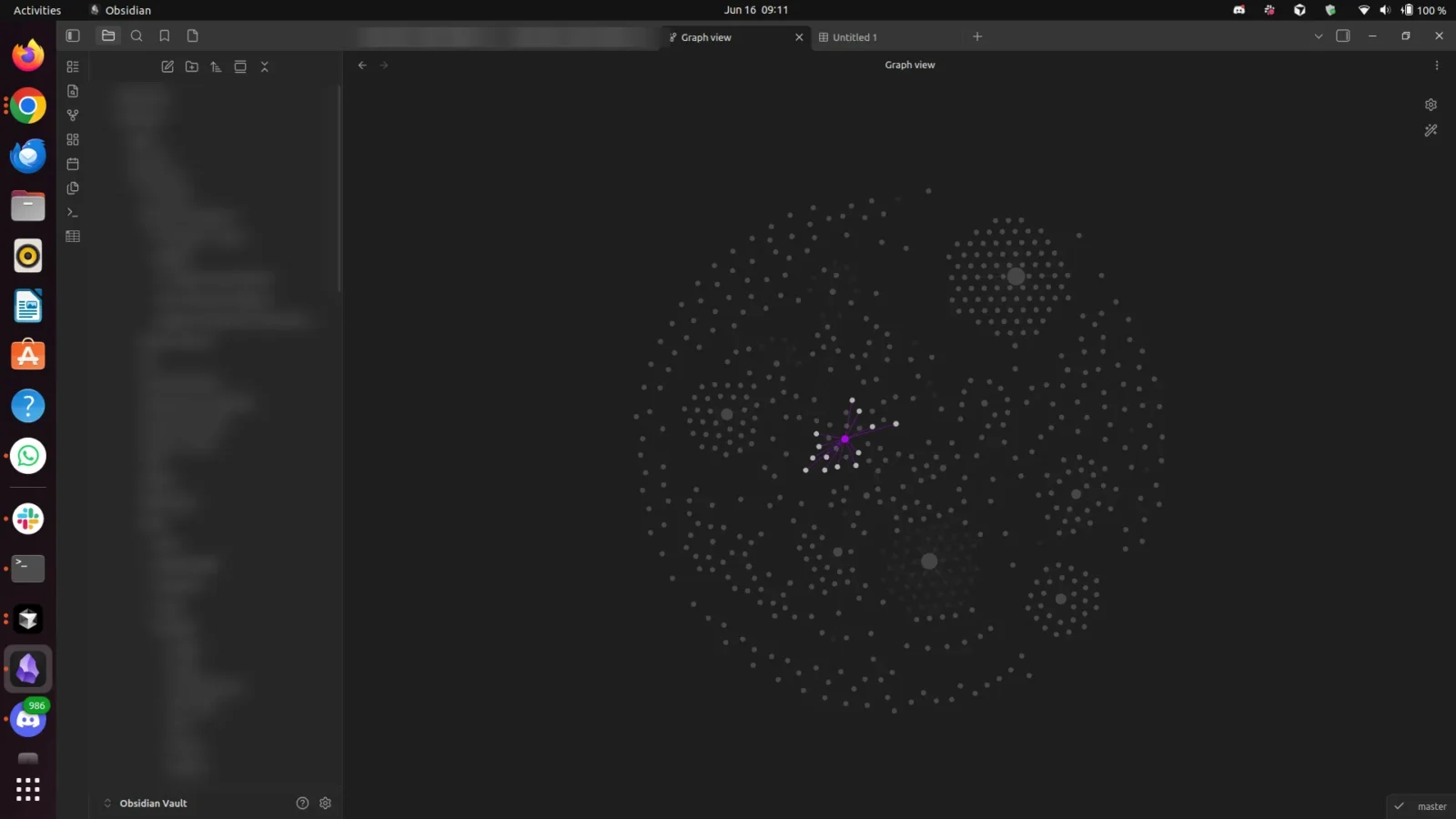
I lived this. After the shift to working with AI every day, I stopped opening Obsidian almost entirely. Here’s the graph view of my old vault:
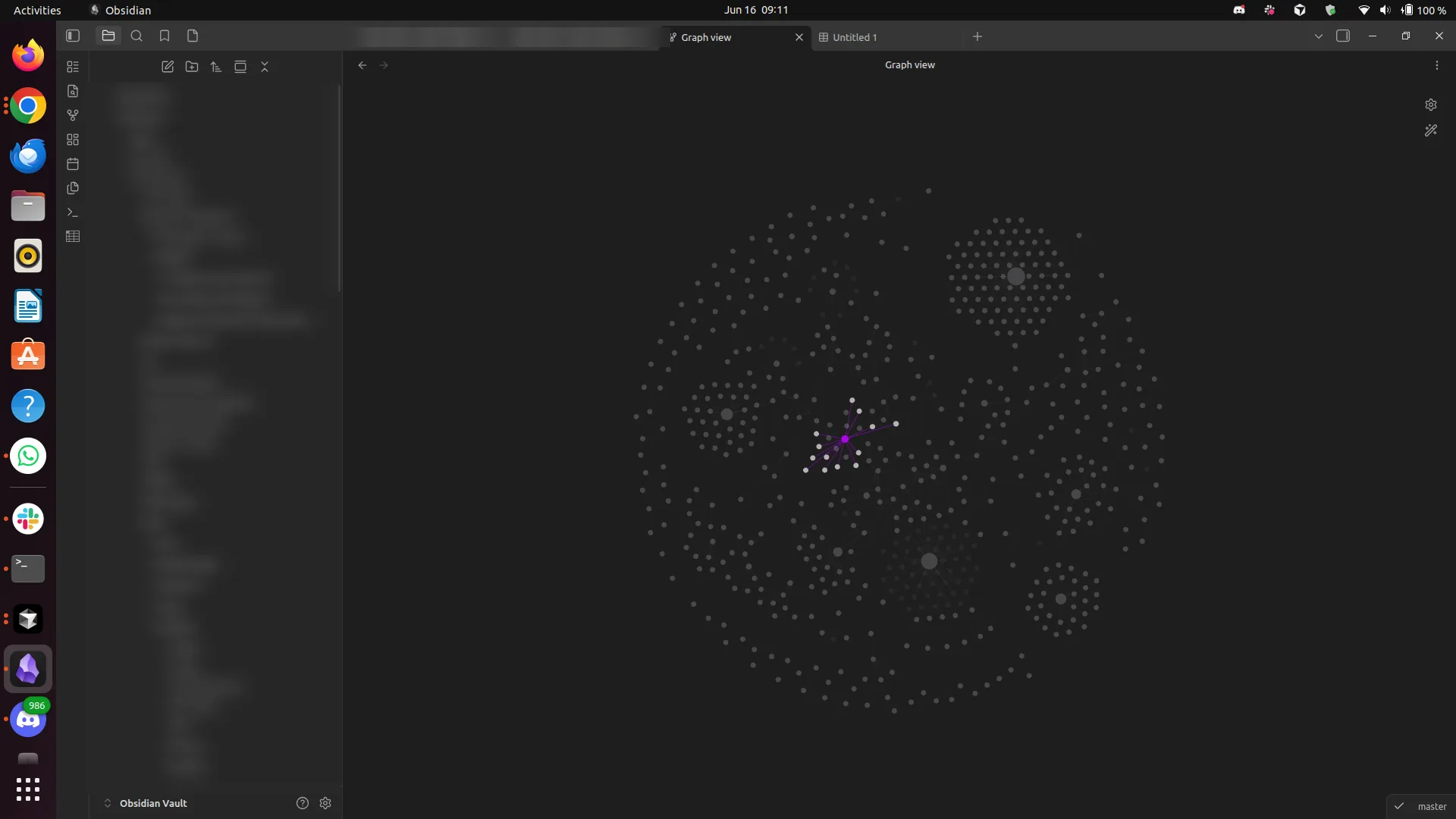
Hundreds of notes, most of them disconnected islands — my own little cemetery. I didn’t fix it by buying a better app or a productivity course. I did the opposite: I constrained where my thinking happens. I moved capture to Notion, purely because it’s the same on my phone, tablet, and laptop — no friction, no excuse. And the real change: most of my actual thinking now happens inside my IDE. I’m a developer, so it’s the environment I already know, where all my tools live, with a simple AI right there to summarize, organize, and connect ideas as I work. Nothing to purchase. Fewer places to hide.
Meet the Second Executioner: Focus Through Constraint
The Second Executioner model replaces storage-heavy workflows with constraint-based ones that mandate focus. Where the Second Brain asks “Where does this go?”, the Second Executioner asks “What forces me to finish this?” That’s the pivot from Personal Knowledge Management (PKM) to Personal Execution Management (PEM).
You don’t need to buy anything to start. The cheapest commitment devices are the ones already built into your software: your phone’s focus mode, a browser’s site blocker, a single working file you’re not allowed to leave until the task ships. By adding behavioral constraints instead of more storage, you stop being a librarian of your own thoughts and start being an architect of your own actions.
How many notes in your Second Brain have you actually turned into a finished project this year? Be honest in the comments.
Keep reading

Can a Non-Coder Actually Ship With Cursor? A Developer’s Honest Test
Cursor is not no-code. Here is what a non-technical founder can realistically ship in weeks — and when you still...

Self-Hosting n8n: The Real Cost vs Cloud (and the 6 hrs/week DevOps Tax)
A founder-facing TCO teardown of n8n Cloud vs self-hosted infra — including the DevOps hours nobody puts in the spreadsheet.

reMarkable vs Boox vs Kindle Scribe: Which One Actually Replaces the Note Vault You Abandoned?
An honest, spec-and-review-based comparison of reMarkable, Boox, and Kindle Scribe for anyone who quit Obsidian or Notion and wants notes...

6 Books That Actually Changed How I Run a One-Person Business (2026)
Not a top-20 listicle. Six books I actually read and applied while running a one-person AI business, and the one...

Do Phone Lock Boxes Actually Work for Founder Focus? The Commitment-Device Case
A clear-eyed look at whether phone lock boxes help a one-person founder focus — grounded in commitment-device research, with free...

Building a Personal Holding Structure for 3-5 Small Business Bets
Once you own 2-plus income-producing assets, a personal holding LLC structure gives small operators a treasury layer that reduces self-employment...
You've reached the end — no more posts to load.
No comments yet — be the first to share your thoughts.