

DIY Dental and Vision Coverage for Self-Employed Founders: The Real Cost Comparison
Self-employed founders who recently lost employer dental and vision benefits face a maze of options — and routinely overpay by defaulting to the first plan they find. This 2026 cost comparison maps every meaningful option — DPPO insurance, dental savings plans, dental school clinics, and self-insurance — with a break-even table and operational decision framework.

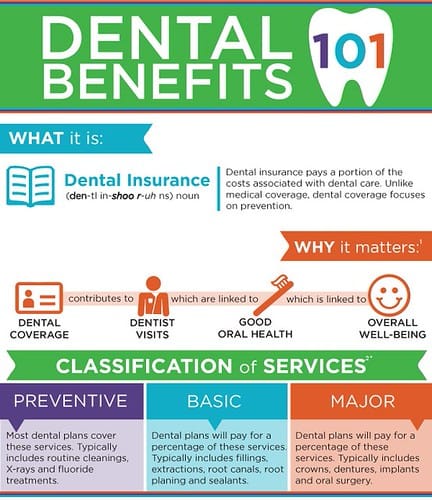
The week I closed my corporate laptop for the last time, I made a spreadsheet of everything I was walking away from. Stock vesting schedule, 401(k) match, two weeks of PTO that didn’t actually exist anymore. And then, buried at the bottom, the line item I’d barely noticed when it was free: dental and vision. The moment I had to source dental vision insurance options self-employed founder cost comparison from scratch, I understood why so many operators get this wrong. The default move is to buy the first standalone plan that surfaces on a Google search and call it infrastructure. That impulse costs founders real money.
This post is a systems breakdown of every meaningful option in 2026 — with real cost ranges, the structural logic of when each option wins, and a break-even table to run the numbers for your specific spend profile. This is general informational content; it is not professional insurance or financial advice. Consult a licensed insurance broker or financial advisor for guidance specific to your situation. All pricing is US-specific and reflects 2026 national averages.
By Rafael Negreiros — 6+ years as a self-employed founder, covering founder financial operations and benefits infrastructure at BrightCurios. View author profile.
Why This Decision Is Different for Founders
Corporate dental and vision benefits are priced for group risk pools. When you leave that pool, you lose the subsidy entirely — not just partially. An employer absorbing $400/year in dental premiums on your behalf doesn’t sound like much until you’re writing that check yourself every month. The other structural reality: dental spending is highly skewed. According to the National Association of Dental Plans (NADP Dental Benefits Report: Enrollment, 2022 edition — the most recent publicly available), only 2.8% of PPO plan holders hit their annual maximum in a given year. That means the insurance model is, for most people in most years, a prepayment structure with overhead — not a risk transfer. Understanding that is the first move.
The second move is recognizing that dental and vision operate under completely different risk profiles and should be evaluated separately, even if you’re inclined to bundle for simplicity.
What About COBRA?
Option 1: Standalone Dental Insurance (DPPO)
A Dental Preferred Provider Organization plan is the product most founders default to. You pay a monthly premium, get a network of participating dentists, and the insurer covers a percentage of costs after your annual deductible.
2026 Cost Reality
- Monthly premium: $25–$50 for individual coverage (national average individual DPPO: approximately $42/month, per eHealth’s 2025 Dental Insurance Price Index; low-end plans from $25/month are available in many markets)
- Annual deductible: typically $50–$100 before major coverage kicks in
- Annual maximum benefit: $1,000–$2,000 (most plans cap at $1,000–$1,500, per the NADP Dental Benefits Report)
- Waiting periods: 6–12 months on major work (crowns, root canals) in most standalone plans
Coverage Structure
Most DPPO plans follow the 100/80/50 rule: 100% for preventive (cleanings, X-rays), 80% for basic restorative (fillings), and 50% for major work (crowns, root canals) — all after the deductible and subject to the annual cap. The cap is the key structural limitation. If you need a crown ($800–$2,500 without insurance) in the same plan year you need two fillings ($150–$300 each) and two cleanings, you can exceed your annual maximum benefit before December. Once you hit the cap, you pay 100% out of pocket for the rest of the year.
Named Plans Worth Comparing in 2026
These are three individual DPPO options commonly available on the open market for self-employed individuals (no employer required). Premiums vary by age, geography, and coverage tier — ranges below reflect national approximations for a healthy adult in 2026:
| Plan | Est. Monthly Premium | Annual Max | Major Work Waiting Period |
|---|---|---|---|
| Aetna Dental Direct | $25–$45/mo | $1,000–$2,000 | 12 months (major) |
| MetLife TakeAlong Dental | $30–$50/mo | $1,000–$2,000 | 6–12 months (major) |
| Spirit Dental (open-enrollment, no waiting period options) | $35–$55/mo | $1,200–$5,000 | None on select plans |
Sources: plan marketplaces and carrier sites as of 2026. Always verify current rates directly with the carrier or a licensed broker before enrolling. Spirit Dental is notable for offering some plans with no major-work waiting period, which changes the math if you have immediate restorative needs.
At $25/month (the low-end DPPO): annual premium cost drops to $300 — nearly tied with a dental savings plan for preventive-only scenarios. The DPPO column in the break-even table below uses the $42/month national average; if you shop and land a $25/month plan, your DPPO preventive-only total drops from $504 to ~$300.
When DPPO Wins
DPPO makes the most structural sense when: (1) you have predictable moderate dental spend that stays under the cap, (2) you want the comfort of a claims process and insurer negotiation, or (3) your state has few dental school clinics and discount plan network coverage is thin.
Option 2: Dental Savings Plans (Discount Plans)
Dental savings plans — sometimes called dental discount plans — are not insurance. No claims process, no reimbursement, no annual maximum. You pay a membership fee, and in exchange you get access to a network of dentists who agree to charge reduced rates to plan members. You pay the discounted rate directly at the time of service. Because these are not insurance, there are no claim guarantees — the discount is entirely dependent on the participating dentist honoring the plan’s contracted rates.
2026 Cost Reality
- Annual membership: approximately $100–$180 for individuals (average: ~$150/year)
- Discount range: 20–50% off participating dentist’s standard rates
- No waiting periods, no annual caps, no deductibles
- Activation: most plans are active within 3 business days of enrollment
Major providers include DentalPlans.com (which aggregates multiple networks), Careington, and Aetna Dental Access. Cigna also offers discount dental programs that function on the same membership model.
The Critical Caveat
Because dental savings plans are not insurance, there is no claims guarantee. If a participating dentist leaves the network or quotes rates above your expected discount, you have limited recourse. The discount is only as reliable as the participating network in your area. Before enrolling, verify that dentists you’d actually see are current in-network participants — not just listed. Dental savings plans have no regulatory guarantees equivalent to insurance — they are a membership benefit, not a contract of coverage.
When Discount Plans Win
Discount plans make sense when: (1) you have solid cash flow and just need a rate reduction, (2) you need coverage immediately (no waiting periods), or (3) you anticipate a major procedure like a crown that would exhaust a DPPO annual max anyway. At $150/year vs. $500+/year in premiums, the math often works even at moderate discount rates.
Option 3: Dental School Clinics
Every accredited dental school in the US operates a patient care clinic where students perform supervised procedures at steeply reduced rates. This is infrastructure, not charity — schools need patients to train on. According to NewMouth’s dental school directory and the American Dental Education Association (ADEA), predoctoral clinics typically charge 50–70% below private-practice rates, with some specialty clinics discounting even further.
2026 Cost Profile
- Discount depth: 50–70% off private practice rates on most procedures (Source: ADEA, NewMouth)
- Cleaning + exam: $30–$80 vs. $150–$350 at private practices
- Crown: $300–$700 vs. $800–$2,500 privately
- Root canal: $250–$600 vs. $700–$2,000 privately
The Real Trade-Off
The cost is time and timeline. Appointments run two to three times longer than comparable private practice visits — a cleaning that takes 45 minutes privately might be a 2.5-hour appointment at a dental school. Complex treatment plans unfold over multiple months, and not all cases are accepted (students need appropriate training cases). For a founder with a controlled calendar and low urgency, this is a legitimate infrastructure choice. For someone who travels constantly or has an active dental situation, the scheduling friction is a real cost.
Option 4: Professional Association Group Plans
One of the most consistently overlooked options for self-employed founders: group dental coverage through professional associations and membership organizations. As a solo operator, you can access group-rate pricing through organizations that aggregate members for group purchasing power — without having W-2 employees.
Key Organizations to Check
- Freelancers Union — Free to join; offers group dental and vision plans in select states. Historically partnered with Guardian and other major carriers. Coverage and availability vary by state; check freelancersunion.org/benefits for current offerings.
- NASE (National Association for the Self-Employed) — Membership runs ~$120–$240/year; dental plans available through member benefits, with premiums reported in the $20–$60/month range for individual dental coverage through their group program.
- Local Chamber of Commerce — Many chambers offer group health and dental benefit programs to members. Membership cost varies ($200–$500/year for many chambers), but group dental rates can be meaningfully below individual market rates. Call your local chamber directly to ask about dental benefit programs.
- Industry-specific associations — Depending on your field, associations (freelance journalist guilds, independent consultants associations, industry trade groups) may offer group dental access. Worth a targeted search for your niche.
What Group Association Plans Actually Cost
- Dental through NASE or similar: approximately $20–$60/month for individual coverage
- Annual membership overhead: factor in association dues when calculating true cost
- Coverage structure: comparable to DPPO (annual max $1,000–$2,000, waiting periods on major work)
The Limitation
Group rates through associations are not always dramatically cheaper than individual market DPPO options — the open-enrollment individual market has become increasingly competitive. In some cases, the association membership cost plus dental premium exceeds what you’d pay for a solid individual DPPO directly. Run the math including dues. The real advantage of association plans is network stability and, in some cases, coverage options not easily available on the individual market.
Option 5: Self-Insurance for Routine, Buy for Major
This strategy only works if a $1,500–$2,000 unexpected dental bill would not create a cash flow crisis. If it would, start with Option 1 (DPPO) or Option 2 (discount plan) first. If your cash position is solid, here’s how it works.
This is the approach I run. The premise: routine dental care (two cleanings/year, annual X-rays) is a predictable, bounded expense — not a risk worth transferring. Major work (crowns, root canals, implants) is the actual risk. The strategy separates them.
How It Works
- Pay routine care out-of-pocket. Two cleanings + X-rays at $200–$350/year is less than 8 months of DPPO premiums on a $45/month plan.
- If your dental spend is predictable and low, bank the premium difference. Over 3 years, $45/month in unspent premiums = $1,620 — enough to cover most major procedures at discount plan or dental school rates.
- If you’re anticipating major work, buy a DPPO when you can time it before the waiting period expires, or use a discount plan to reduce the procedure cost immediately.
For founders managing ACA marketplace plans alongside these decisions, the income structuring piece interacts significantly — worth reading our breakdown of how ACA subsidy cliffs affect founder income levers in 2026. If you’re currently navigating the broader founder financial restructuring — self-employment tax, quarterly estimates, and the complete benefits rebuild — our mid-year tax audit checklist for solo founders covers the full stack of moves worth making before Q3.
Break-Even Analysis: Which Option Wins at Your Spend Level?
The table below maps total annual out-of-pocket cost (premiums + expected OOP at point of care) across options at three dental spend levels. DPPO column uses the $42/month national average; if you secure a $25/month plan, the DPPO preventive-only total drops from $504 to approximately $300, nearly matching the discount plan. Numbers use 2026 estimates; individual results vary by geography, age, and plan specifics.
| Annual Dental Scenario | DPPO (avg $42/mo) | Discount Plan ($150/yr) | Dental School | Self-Pay (No Plan) |
|---|---|---|---|---|
| 2 cleanings + X-rays only | $504 premiums + $0 OOP = $504 | $150 + ~$120 OOP = $270 | $0 + ~$60–$160 = $60–$160 | $200–$350 = $200–$350 |
| 2 cleanings + 2 fillings | $504 + ~$60 OOP = $564 | $150 + ~$220 OOP = $370 | $0 + ~$130–$260 = $130–$260 | $450–$700 = $450–$700 |
| 2 cleanings + 1 crown | $504 + ~$600 OOP = $1,104 | $150 + ~$700 OOP = $850 | $0 + ~$350–$750 = $350–$750 | $1,100–$2,700 = $1,100–$2,700 |
| 2 cleanings + root canal + crown | $504 + ~$1,400 OOP (cap hit) = $1,904 | $150 + ~$900 OOP = $1,050 | $0 + ~$600–$1,200 = $600–$1,200 | $2,000–$5,000+ = $2,000–$5,000+ |
Table assumptions: DPPO at $42/month national average premium, $1,500 annual max, 50% major coverage after $75 deductible. Discount plan at 30% average discount, $150 annual fee. Dental school at 60% average discount (Source: ADEA/NewMouth). OOP figures approximate 2026 national averages. Actual costs vary by geography, plan, and provider. Source for DPPO average: eHealth Dental Insurance Price Index 2025.
The bottom line from this table: For founders who need only preventive care, a dental savings plan ($270 total) or dental school ($60–$160) consistently outperforms a DPPO ($504). For major work like a root canal plus crown, the discount plan ($1,050) and dental school ($600–$1,200) both beat DPPO ($1,904) — largely because the DPPO annual maximum cap is exhausted mid-procedure, leaving you paying full OOP for the remainder. The DPPO advantage is most visible in the crown-only scenario, where it splits the risk and keeps total cost to $1,104 vs. up to $2,700 self-pay.
Vision Coverage: A Complete Breakdown
Vision coverage is structurally simpler than dental because the cost range is narrower and the risk profile is more predictable. But “simpler” doesn’t mean the math is automatic. An annual comprehensive eye exam runs $69–$200 without insurance. Contacts for a year run $150–$400. Glasses frames and lenses, $100–$600+ depending on complexity. A founder spending $300+/year on contacts alone deserves more than a paragraph — here’s the full structure.
Standalone Vision Insurance in 2026
VSP Individual Plans ($13–$20/month)
- Exam copay: $10–$20 copay on annual comprehensive eye exam at in-network providers
- Frames allowance: $150–$200 retail credit toward frames at VSP-network optical retailers; 20% off any balance above the allowance
- Contact lens benefit: up to $150–$200 toward contact lenses in lieu of frames benefit (you choose contacts or glasses each benefit year, not both)
- LASIK discount: VSP members typically receive 15% off LASIK at participating providers (not a coverage benefit — a negotiated discount)
- Network strength: VSP tends to have stronger rural and suburban coverage vs. EyeMed; check network density in your area before choosing
EyeMed Individual Plans ($5–$30/month — three tiers)
- Healthy (entry, ~$5–$9/mo): exam covered once per year with a copay (~$10); frames allowance $130–$150; contact lens benefit $130; no LASIK benefit at entry tier
- Bold (~$12–$18/mo): exam copay reduced; frames allowance $200; contact lens benefit $200; 15% LASIK discount at participating providers
- Bright (~$20–$30/mo): enhanced exam benefits; frames allowance $250+; contact lens benefit up to $250; broader LASIK discount program
- Network: EyeMed has strong urban/metro coverage and includes LensCrafters, Target Optical, Sears Optical in-network — convenient for founders in major markets
- Renewal note: EyeMed benefits reset annually; unused allowances do not roll over. If you skip an exam year, you lose that year’s benefit entirely.
Vision Break-Even Table: Contacts vs. Glasses vs. Both
| Annual Vision Scenario | VSP ($15/mo, ~$180/yr) | EyeMed Healthy (~$84/yr) | Self-Pay (No Plan) |
|---|---|---|---|
| Exam only (no glasses/contacts) | $180 + $15 copay = $195 | $84 + $10 copay = $94 | $100–$175 = $100–$175 |
| Glasses only (exam + frames/lenses every year) | $180 premiums + $15 copay + ~$80 over-allowance = ~$275 | $84 + $10 copay + ~$120 over-allowance = ~$214 | $250–$500 = $250–$500 |
| Contacts only ($200–$350/yr supplies, annual exam) | $180 premiums + $15 copay + ~$75 over-allowance = ~$270 (vs. $350–$500 OOP) | $84 + $10 copay + ~$100 over-allowance = ~$194 | $300–$500 = $300–$500 |
| Contacts + backup glasses (high-use founder) | $180 + $15 + ~$200 over-allowance (contacts benefit doesn’t cover glasses same year) = ~$395 | $84 + ~$250 OOP (contacts + glasses separate) = ~$334 | $500–$800 = $500–$800 |
Table assumptions: VSP Choice plan at $15/month; EyeMed Healthy at $7/month; allowances based on 2026 plan structures. “Over-allowance” is cost above the frame/lens/contact credit. Key note: VSP and EyeMed generally offer contacts or frames benefit in a single plan year — not both. If you need contacts AND backup glasses in the same year, expect out-of-pocket costs for the second category regardless of plan tier.
Takeaway: If you’re a contacts-primary founder spending $300+/year on supplies, EyeMed Healthy at ~$84/year delivers meaningful savings and pays back clearly. VSP starts to make sense when you’re in a suburban/rural market with weaker EyeMed network coverage, or when your prescription complexity means you regularly spend above the allowance on both exam and lenses. Glasses-only founders should run the exam-plus-frames math against their actual spend — for stable prescriptions with infrequent frame replacement, self-pay often ties or beats either plan.
The Operational Decision Framework
Here is the decision logic I’d apply as an operator:
- Pull your last 3–5 years of dental receipts or Explanation of Benefits statements and total your annual spend. If your annual dental total is consistently under $300, move directly to Option 2 (discount plan) or Option 3 (dental school) — the break-even table shows DPPO doesn’t justify its premium at that spend level. If your total regularly hits $600+, DPPO or association group plans deserve a serious look.
- Search the ADEA dental school locator for your metro area. If a dental school clinic is within 30 minutes and you can block 2–3 hour appointment slots, it changes the math at every spend level. Note this access before committing to any premium product.
- Calculate your actual annual vision spend: exam + contacts or glasses cost, separately. If your contacts budget exceeds $200/year, model EyeMed Healthy at ~$84/year against self-pay — most contacts-wearing founders will find the plan pays back. If you’re glasses-only with a stable prescription renewed every 2 years, self-pay often ties or beats VSP.
- Run the premium payback test. For dental: take your expected annual dental spend, apply each coverage model, and see where you break even against premiums. The break-even table above gives you the structure; plug in your own numbers at the $25/month DPPO low end if you’re price-sensitive.
- Check association membership. If you’re already a member of Freelancers Union, NASE, or a local chamber, check their dental benefits before shopping the open individual market — group rates may compete or beat individual DPPO pricing.
FAQ: Dental and Vision Coverage for Self-Employed Founders
Is dental insurance worth it if you are self-employed?
For most self-employed founders with average dental health, standalone DPPO insurance is not the cost-optimal choice — the break-even table above shows dental savings plans and dental school clinics outperform DPPO at preventive-only and even moderate restorative spend levels. DPPO makes financial sense in two scenarios: (1) you have predictable major restorative work in a year where the plan can pay its annual maximum, or (2) you’re in a geography with limited discount plan network coverage and no dental school access. For founders with only preventive needs, a $150/year discount plan membership consistently beats $504/year in DPPO premiums.
What is the average monthly cost of dental insurance for self-employed individuals in 2026?
The average individual DPPO premium for self-employed adults in 2026 is approximately $42/month ($504/year), per eHealth’s dental insurance price data. Low-end DPPO plans from carriers like Aetna Dental Direct start around $25/month ($300/year) in many markets. Dental savings plan memberships run $100–$180/year (no monthly premium structure). Professional association group dental through NASE or chamber programs typically costs $20–$60/month. The lowest-cost option for individual dental coverage — if a dental school is accessible — is direct payment to a dental school clinic at 50–70% below private-practice rates, with no annual membership or premium.
Can the self-employed get group dental rates?
Yes — through professional associations and membership organizations. Freelancers Union (free to join, select states), NASE (~$120–$240/year in dues), and many local chambers of commerce offer group dental access to self-employed members without requiring W-2 employees. Group rates through these organizations are typically in the $20–$60/month range for individual dental coverage. Coverage structure is generally comparable to individual DPPO plans — same annual max and waiting period concepts apply. Always factor in association membership dues when calculating the true cost vs. buying individual DPPO directly.
Can I deduct dental and vision premiums as a self-employed person?
Self-employed individuals may be able to deduct health insurance premiums — including standalone dental and vision — under the self-employed health insurance deduction (IRC §162(l)), provided you meet the eligibility requirements and are not eligible to participate in an employer-subsidized plan through a spouse. This is a significant potential tax benefit, but the rules have specific eligibility conditions. Consult a tax professional to confirm your situation qualifies. This is general information, not tax advice.
Are dental savings plans worth it if I only go for cleanings?
At $150/year in membership fees and 20–50% discounts, a dental savings plan often breaks even if you get two cleanings per year at participating dentists. At a 30% discount on $250 in cleaning costs, you save ~$75 — not quite covering the membership fee. However, the real value appears when you have any restorative work: a single filling or crown at a 30–50% discount can more than offset the annual fee in one procedure. If you truly only get cleanings and have a dental school nearby, paying out of pocket at dental school rates may still be cheaper. Remember: dental savings plans are not insurance and have no claims guarantees — the discount is only as reliable as the participating dentist network in your area.
What is the main risk of the self-insure strategy?
The primary risk is adverse selection timing — specifically, discovering you need major work (a crown, root canal, or extraction) during a period when you don’t yet have insurance. A standalone DPPO typically imposes 6–12 month waiting periods on major procedures. If you attempt to enroll only when you anticipate major work, you may not have coverage when you need it. Mitigation: maintain a dedicated cash reserve of at least $1,500–$2,000 for dental emergencies, understand exactly what waiting period your target DPPO plan imposes, and consider a dental savings plan as immediate-access rate reduction while you wait for DPPO waiting periods to clear.
Conclusion: Build the Coverage Layer That Matches Your Cash Position
The goal isn’t minimizing what you pay for coverage — it’s optimizing the total cost system. That means premiums plus expected out-of-pocket spend, calibrated against your actual dental history and your available cash reserve. For most founders in early-stage self-employment, a dental savings plan plus dental school access plus a funded cash buffer outperforms a DPPO on pure cost math. But if you’re anticipating major restorative work, DPPO’s risk transfer is worth the premium overhead — particularly if you can time enrollment to clear the waiting period. Association group plans and the professional organization route are worth pricing before you commit to the individual open market.
On vision: contacts-wearing founders spending $200+/year on supplies will almost always recover EyeMed or VSP premiums through the plan’s allowances. Glasses-only founders with stable prescriptions renewed every other year should model self-pay — it often ties or beats plan premiums once copays and over-allowance costs are factored in. The framework for dental vision insurance options self-employed founder cost comparison is not one-size; it’s a structured decision based on your spend level, geographic access, and cash infrastructure.
Build the layer that fits your operating model. Then revisit it annually — dental networks shift, discount plan coverage evolves, and your own dental history changes the math.
General information only. Not professional insurance, tax, or financial advice. Consult a licensed insurance broker or financial advisor for guidance specific to your situation. Pricing ranges reflect 2026 US national averages; actual costs vary by geography, age, plan, and provider. Plan names and rates referenced for illustrative comparison only — verify current rates with carriers directly before enrolling.
Keep reading

Can a Non-Coder Actually Ship With Cursor? A Developer’s Honest Test
Cursor is not no-code. Here is what a non-technical founder can realistically ship in weeks — and when you still...
Self-Hosting n8n: The Real Cost vs Cloud (and the 6 hrs/week DevOps Tax)
A founder-facing TCO teardown of n8n Cloud vs self-hosted infra — including the DevOps hours nobody puts in the spreadsheet.

reMarkable vs Boox vs Kindle Scribe: Which One Actually Replaces the Note Vault You Abandoned?
An honest, spec-and-review-based comparison of reMarkable, Boox, and Kindle Scribe for anyone who quit Obsidian or Notion and wants notes...

6 Books That Actually Changed How I Run a One-Person Business (2026)
Not a top-20 listicle. Six books I actually read and applied while running a one-person AI business, and the one...

Do Phone Lock Boxes Actually Work for Founder Focus? The Commitment-Device Case
A clear-eyed look at whether phone lock boxes help a one-person founder focus — grounded in commitment-device research, with free...

The ‘Second Brain’ is Over: Why You Need a Second Executioner
Stop hoarding notes and start shipping. Discover why the Second Brain fails and how the Second Executioner model uses Personal...
You've reached the end — no more posts to load.
No comments yet — be the first to share your thoughts.