

Concentration Risk: 80% of Your Net Worth Is One Business — Now What?
When 80% of your net worth is locked in one illiquid SaaS, you have a concentration risk problem that no index fund guide will solve — here is how to quantify it and start deconcentrating without killing the golden goose.

What Is Concentration Risk for Founders?
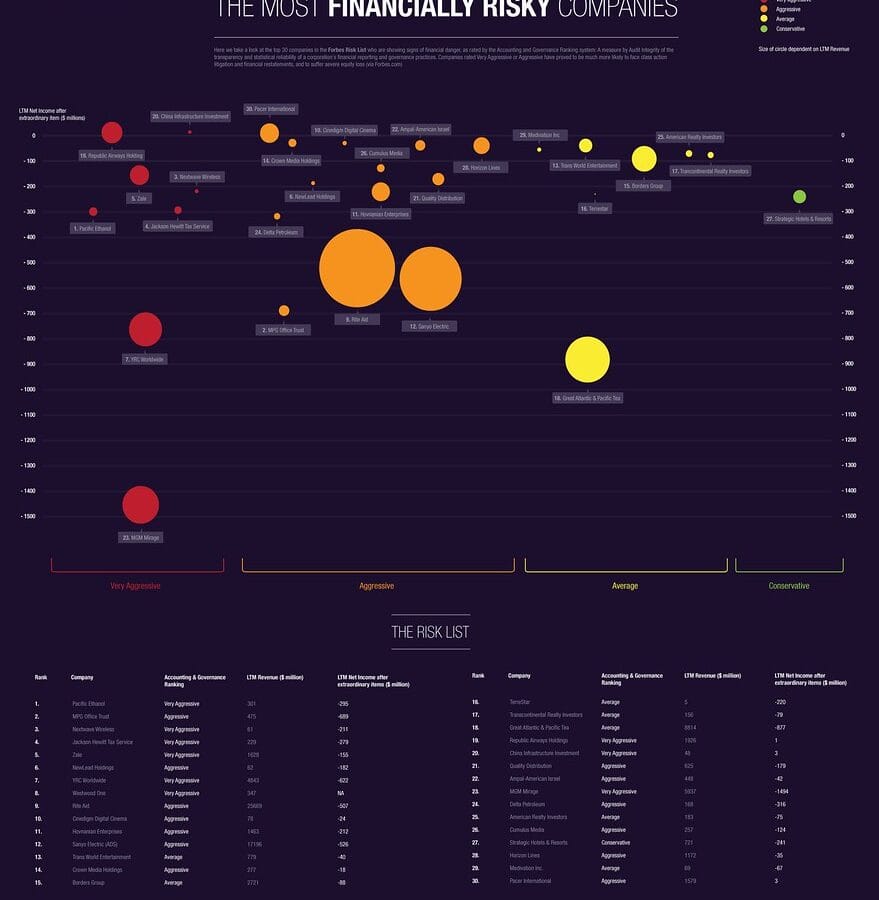
Concentration risk is the exposure that results from holding a disproportionate share of your net worth in a single illiquid asset. For bootstrapped founders, this typically means 70–80% of total net worth locked in one operating business with no public market exit — a position that would be flagged as extreme by any credentialed wealth advisor and that most portfolio risk frameworks don’t even model for retail investors, because it almost never happens outside of founder and early-employee situations.
If your net worth spreadsheet reads $1.8M and $1.44M of that number is one illiquid SaaS company you built, congratulations — and also, condolences. You have a concentration risk founder net worth single business problem that no index fund rebalancing guide will address. This isn’t a budgeting issue. It’s a risk-management problem that sits at the intersection of private-equity valuation, behavioral finance, and founder psychology, and the stakes are high enough that I want to walk through the math precisely before we discuss any tactics.
Most wealth advisors flag anything above 30% in a single illiquid asset as material concentration risk. Above 70% is severe. Above 80% is the zone where a single bad year — a platform API change, a key-account churn event, a macro multiple compression — can erase more than a decade of compounding in under 12 months.
This post is general information only — nothing here constitutes professional financial, tax, or legal advice. Consult a qualified advisor for your specific situation. Inline disclosures appear at points of specific legal or tax guidance.
Why the Public-Market Analogy Breaks Down
In public markets, concentration risk has a clear rule of thumb: holding more than 10–15% of your net worth in a single stock puts you outside normal diversification guidelines, and above 30% is generally flagged as material risk by most wealth advisors. At 80%, you are in a category that most portfolio risk frameworks don’t even model for retail investors — because it almost never happens outside of founder and early-employee situations.
But the public-market analogy breaks down in a crucial way. A public stock is liquid by definition. You can sell $200K of Microsoft shares between 9:30 and 4:00 EST on any business day with a two-day settlement. Your SaaS business cannot be sold in a day, a week, or even a quarter. The typical M&A process for a sub-$10M enterprise-value bootstrapped SaaS runs 90–180 days from initial outreach to close — and that assumes you find a motivated buyer at your price. (Source: Acquire.com’s acquisition timeline data and micro-PE deal flow reports consistently place this range for sub-$5M ARR businesses.)
Illiquidity isn’t just an inconvenience. It is a separate, compounding risk layer on top of valuation risk. Your $1.44M in business equity faces two independent ways to decline: (1) the business itself deteriorates, and (2) the market for businesses like yours deteriorates, even if your metrics are flat. Both risks materialized simultaneously during the 2022–2023 SaaS multiple compression cycle, when SaaS Capital’s index fell roughly 60% from its 2021 peak before stabilizing around 6–7x ARR by 2025.
Quantifying the Risk: Volatility Proxies for a Private SaaS at 4.8x ARR
Private companies don’t publish daily price ticks, but we can construct reasonable volatility estimates using public-market analogues and M&A data.
The median valuation multiple for a bootstrapped SaaS company in 2025 sits at 4.8x ARR according to SaaS Capital’s 2025 annual valuation survey. But the range for companies in the $100K–$5M ARR band is 3x to 7x ARR — a peak-to-trough swing of more than 2x. If your business generates $300K ARR and is currently valued at 4.8x ($1.44M), a de-rating to 3x produces a value of $900K. That single variable — buyer sentiment about SaaS multiples — could erase $540K of your paper net worth without you changing a single line of code.
Add operating risk on top of that. A SaaS business with 9% gross churn (the bootstrapped median, per SaaS Capital’s churn benchmarks) compounds to approximately 65% logo retention over five years. Losing a few key accounts or a major platform dependency change (a single API deprecation, a change in marketplace terms) can move churn from 9% to 20%+ in a matter of months. At 20% churn, your multiple compresses further — most buyers apply a 1.5–2x haircut to businesses with deteriorating retention — and suddenly a $1.44M asset has become a $600K asset.
Based on median bootstrapped SaaS multiple of 4.8x ARR. Business generates $300K ARR.
| Scenario | Multiple | Business Value | Liquid Portfolio | Total NW | NW Change |
|---|---|---|---|---|---|
| Base case (today) | 4.8x | $1,440,000 | $360,000 | $1,800,000 | $0 (0%) |
| Multiple compression only | 3.0x | $900,000 | $360,000 | $1,260,000 | −$540,000 (−30%) |
| ARR −20% + multiple at 3x | 3.0x | $720,000 | $360,000 | $1,080,000 | −$720,000 (−40%) |
| Business failure (wind-down) | 0x | $0 | $360,000 | $360,000 | −$1,440,000 (−80%) |
That bottom row — business failure with a $360K residual — is the founder’s version of a single-stock going to zero. Unlike a public company, you cannot set a stop-loss order. By the time the deterioration is obvious enough to trigger a sale, your options narrow dramatically and the buyer pool shrinks. As I’ve written about in the context of reading macro recession signals before they hit your revenue, the businesses that fail loudest are often the ones whose owners spent the most time denying early warning signs rather than hedging.
The Compounding Objection: What If the Business Returns 40% Annually?
The most common reason bootstrapped founders give for not deconcentrating is also the most rational-sounding: “Every dollar I pull out is a dollar that doesn’t compound at my business’s internal rate of return, which is higher than any index fund.”
This is true — up to a point. A SaaS business reinvesting $100K of free cash flow at a 40% IRR compounds faster than a diversified index portfolio at 7–9%. For a founder 20+ years from needing the money, the math can favor concentration. But the model breaks down when you account for two factors the IRR calculation ignores: illiquidity discount and failure probability.
Bootstrapped SaaS companies have a non-trivial failure rate over a 5-year horizon — SaaS Capital and similar sources consistently show 20–30% of companies in the $100K–$1M ARR range fail to survive 5 years. If you assign even a 20% probability of total loss to the “40% IRR” scenario, the expected-value calculation shifts dramatically. The Kelly Criterion — a framework for sizing bets relative to edge — suggests optimal position sizing well below 80% of net worth even at high expected returns, precisely because the variance is so large. Putting 80% of your wealth into a single bet with even a 20% ruin probability fails any reasonable risk-sizing framework.
The practical resolution: continue reinvesting what the business needs to defend its moat and growth rate. Extract everything above that threshold — the cash that would otherwise sit in a checking account or fund non-essential growth experiments — and redirect it to a liquid portfolio. The business still gets its high-IRR reinvestment. You stop taking uncompensated variance on money the business doesn’t actually need.
The Cost of Hedging: What Partial Liquidity Actually Runs You
There are three realistic mechanisms for reducing concentration while keeping the business running. None are free.
1. Structured Secondary Sale of Equity
Platforms like Forge and EquityZen have formalized secondary markets for private company shares. For VC-backed companies, this is relatively established. For bootstrapped SaaS companies, it’s harder — most secondaries happen through direct negotiation with search funds, private equity firms, or strategic buyers willing to acquire a minority stake.
The economics are punishing relative to public markets. Common stock (what you hold as a founder) typically trades at a 20%–40% discount to the implied preferred-stock valuation in secondary transactions. Broker commissions run 5% on each side of the transaction (buyer and seller). If you sell $200K of equity in a secondary deal priced at a 25% discount to your carried value, you net roughly $150K before any capital gains treatment.
For bootstrapped founders at sub-$5M ARR, the most realistic paths to partial secondary liquidity are:
- Acquire.com — has a minority-stake and partial-acquisition listing category; smaller deal sizes are normalized here
- Micro-PE firm outreach — firms like Permanent Equity, Chenmark, and Relay Commerce actively pursue partial buyouts of bootstrapped software businesses; a broker conversation costs you nothing
- Revenue-based financing via Pipe or Clearco — not equity dilution, but gives you capital against recurring revenue now; repayment comes from future revenue; effective cost is typically 8–15% of funds advanced and does not require a buyer
- Search fund introductions — many searchers are open to structured minority rolls-up; networking through SearchFunder.com or ETA-focused MBA communities is a low-cost starting point
This mechanism makes most sense if you can negotiate a clean minority-stake sale to a single buyer who brings strategic value, and if your business has clean documentation, audited-quality financials, and doesn’t rely solely on you to operate.
2. Dividend Extraction / Profit Distribution
The less headline-grabbing but operationally simpler path: run the business profitably and systematically pull cash out as owner distributions. At $300K ARR with strong unit economics, a bootstrapped SaaS might generate $120K–$180K in free cash flow annually. If you redirect 50–60% of that into a diversified brokerage account instead of reinvesting, you are deconcentrating your net worth at roughly $60K–$108K per year — without any transaction friction, no discount to value, no third-party counterparty.
The math over five years: $75K/year in systematic distributions compounds to roughly $460K (at 7% portfolio returns) in liquid assets. Your concentration ratio drops from 80% to roughly 60%, assuming business value stays flat. That’s not zero concentration, but it’s meaningfully less catastrophic in a tail scenario.
The “golden goose” risk here is real: under-reinvesting in a SaaS product while competitors iterate creates churn pressure, which compresses your multiple, which makes the remaining illiquid equity worth less. The optimal distribution rate is highly business-specific. Businesses with high NRR (above 110%) and stable competitive moats can support higher extraction rates than businesses in commoditizing markets. You can see how tax-efficiency of that extraction interacts with your income structure in our analysis of mid-year tax moves every solo founder should run through in 2026.
This post uses SaaS ARR multiples as the valuation frame, but the concentration risk math applies equally to service businesses, e-commerce operators, and content businesses. The key difference: services and e-commerce businesses are typically valued on EBITDA multiples (2–4x for most owner-operated service businesses), not ARR. The illiquidity problem is identical or worse — services businesses are harder to sell without the founder because the relationships are personal. If 70%+ of your net worth is in any single operating business regardless of model, the deconcentration framework in this post applies. Adjust your multiple range to your business type when running the stress-test table.
3. QSBS and the Tax Shield on Exit
Section 1202 of the IRC — Qualified Small Business Stock — is one of the most powerful tax tools available to C-corporation founders in the US, and it directly affects the de-concentration calculus. Under current law (IRC Section 1202), founders can exclude up to $10M in capital gains from federal taxes on QSBS held for five or more years. Proposed legislation (commonly referred to as the One Big Beautiful Bill, passed by the House in 2025) would raise the exclusion cap to $15M for shares issued after a specified effective date — but as of this writing, the final enacted version of this provision, including the exact effective date, should be verified with a qualified tax attorney or by checking the IRS’s Section 1202 guidance directly. This is general information; QSBS eligibility and any legislative changes are fact-specific — verify with a qualified tax attorney before relying on any specific cap or effective date.
The company must be an active domestic C corporation with gross assets under $75M at the time of issuance. For our $1.44M scenario: if the entire business stake qualifies as QSBS and you sell at $1.44M with a near-zero cost basis, the 100% exclusion shelters your entire gain. At a hypothetical 23.8% combined federal rate (20% LTCG + 3.8% NIIT), the QSBS exclusion on $1.44M saves approximately $343K in taxes. That tax savings is itself a form of concentration hedge — it means the after-tax proceeds of a future sale are materially higher than an equivalent sale of a non-QSBS asset, which justifies holding longer.
The critical caveat: QSBS treatment requires careful structuring from the start, applies only to C corporations (not LLCs or S corps), and has multiple disqualifying conditions. Verify your eligibility with a qualified tax attorney — the stakes are high enough to justify the professional fee.
A Decision Framework: When to Start Deconcentrating
The question most founders ask is when to start pulling capital out. The answer depends on three variables working in combination:
- Concentration ratio: Above 70% in a single illiquid asset, the asymmetric downside risk is severe enough that systematic extraction should begin regardless of growth rate. This isn’t about being bearish on your business — it’s about acknowledging that 80% concentration in any single asset is indefensible from a risk-management standpoint.
- Business defensibility: A business with NRR above 110%, diversified customer base (no single customer above 15% of ARR), and documented processes that don’t require you personally to deliver the product can sustain higher distribution rates. A founder-dependent business with 20% churn should not be extracting heavily — it needs the capital to solve its retention problem first.
- Personal FIRE timeline: If you’re 15+ years from your target retirement/FIRE number, compounding inside the business at high returns may still beat early diversification. If you’re within 7–10 years of needing to live off this wealth, every year of delay in diversification is a year of uncompensated tail risk. The habits that actually move your long-term wealth math are almost never about finding better investments — they’re about managing downside scenarios that would reset your timeline.
The 60/40 Target as a Waypoint
A practical interim target for most wealth-stage founders: get the business concentration below 60% of net worth within three years. In our scenario, that means growing the liquid portfolio from $360K to $576K while maintaining business value at $1.44M — requiring approximately $72K/year in net-of-tax distributions redirected to investments. That’s achievable on $120K–$150K of annual free cash flow without starving the business of growth capital.
At 60/40 (business/portfolio), the tail scenario changes materially: a full business failure still hurts — you lose $864K — but the $720K liquid portfolio cushion gives you 10–15 years of runway at a monthly spend of approximately $4,000–$5,000 (consistent with a 3.5% withdrawal rate on $720K yielding roughly $25,200/year), or enough capital to restart. That’s survivable. The 80/20 scenario — $360K liquid with 15+ years before a target FIRE date — is not. $360K at a 3.5% withdrawal rate generates $12,600/year. That is not a cushion; it is a countdown clock.
FAQ: Concentration Risk for Bootstrapped Founders
What percentage of net worth should be in one business?
Most wealth advisors flag anything above 30% in a single illiquid asset as material concentration risk. Above 70% is classified as severe by most portfolio risk frameworks. As a practical target, getting below 60% in your primary business within 3–5 years — while maintaining a fully liquid emergency buffer of 6–12 months of personal expenses — is the benchmark most founders working with wealth advisors settle on. The goal isn’t to eliminate concentration (your business equity is a legitimate high-expected-return asset), but to ensure a catastrophic downside scenario doesn’t destroy your financial life.
How do I value my business for concentration risk purposes?
Use a conservative multiple on your trailing twelve months (TTM) of ARR or EBITDA, depending on your business type. For bootstrapped SaaS, a conservative 3–4x ARR is appropriate for stress-testing purposes even if the current market supports higher multiples — because the question isn’t “what could I sell for today in a favorable market?” but “what is this worth in an adverse scenario?” For service businesses, use 2–2.5x EBITDA as your stress-test floor. For e-commerce, 1.5–2.5x EBITDA depending on brand strength and channel diversification. Apply this conservative figure to your concentration ratio calculation, not the optimistic number.
Does taking a distribution hurt my SaaS valuation at exit?
Not inherently, as long as the business continues to grow ARR and maintain healthy metrics. Buyers value businesses on revenue multiples and growth rate — they don’t penalize distributions that happened years before the sale. What they do penalize is under-investment that caused churn to spike or product stagnation. The decision to distribute should always follow an honest assessment of what the business actually needs to defend its moat, not a formula.
Can I sell a minority stake in my bootstrapped SaaS to diversify?
In theory, yes. In practice, the market for minority stakes in bootstrapped SaaS businesses under $5M ARR is thin. Search funds and small PE firms prefer to acquire 100% for control. Strategic buyers also typically want full ownership. Your best realistic paths to partial liquidity below $2M business value are: (1) a listing on Acquire.com’s minority-stake category, (2) a direct negotiated deal with a micro-PE firm like Permanent Equity or Relay Commerce, (3) revenue-based financing via Pipe or Clearco against recurring revenue — which gives you capital now without equity dilution but carries a repayment cost of 8–15% of funds advanced, or (4) a search fund introduction via SearchFunder.com.
Is revenue-based financing a way to reduce concentration risk?
Partially. Revenue-based financing (RBF) through platforms like Pipe or Clearco gives you liquid capital now without selling equity. The repayment is structured as a percentage of monthly revenue (typically 2–8%), so there’s no fixed debt service. The effective cost is usually 8–15% of the advance amount. This doesn’t reduce your equity concentration — you still own 100% of an illiquid business — but it converts some of your future revenue into present cash, which you can deploy into a liquid portfolio. It’s a useful bridge tool when you need immediate liquidity but aren’t ready to sell equity.
What happens to QSBS eligibility if I sell before the 5-year threshold?
If you sell or exchange QSBS before the 5-year holding period, you lose the Section 1202 exclusion entirely for that transaction. You can, however, roll gains from an early sale into replacement QSBS within 60 days (under IRC Section 1045) and restart the clock on qualifying replacement shares. This is a critical planning point for founders who receive acquisition offers in years 2–4 after incorporation — the 60-day rollover window is tight and requires immediate coordination with a tax attorney. General information only — verify your specific situation with a qualified tax professional.
What about non-SaaS founders — does this framework apply?
Yes, with adjusted multiples. Services businesses are valued at 2–4x EBITDA; e-commerce at 1.5–2.5x EBITDA; content businesses at 2–4x annual net revenue depending on traffic stability. The concentration risk is often higher in non-SaaS businesses because recurring revenue is less predictable and buyer pools are different. The deconcentration framework — systematic distributions, QSBS if applicable, partial-sale exploration — applies identically. Substitute your sector’s valuation multiple into the stress-test table above.
Conclusion: Own the Problem Before It Owns You
The uncomfortable truth about concentration risk as a founder with your net worth in a single business is that the time to act is not when the business falters — it’s now, while multiples are reasonable and cash flow is positive. The scenarios in the table above aren’t edge cases: a 30–40% decline in total net worth from multiple compression alone happened to an entire category of SaaS founders between 2021 and 2023, and many of them had no liquid fallback.
The three moves worth modeling this quarter: (1) calculate your exact concentration ratio using a conservative 3x multiple stress-test, (2) set a target distribution rate that doesn’t compromise the business’s ability to invest in retention and product, and (3) verify your QSBS eligibility status with a tax professional if you’re operating as a C corp. None of these require selling anything today. They require knowing what you’re sitting on.
Your business built the net worth. Now the job is making sure the net worth survives the business — whatever form that takes.
General information only — nothing here constitutes professional financial, tax, or legal advice. QSBS eligibility, legislative changes, and optimal distribution structures are fact-specific. Consult a qualified tax attorney and/or registered investment advisor for guidance tailored to your situation.
Keep reading

Can a Non-Coder Actually Ship With Cursor? A Developer’s Honest Test
Cursor is not no-code. Here is what a non-technical founder can realistically ship in weeks — and when you still...

Self-Hosting n8n: The Real Cost vs Cloud (and the 6 hrs/week DevOps Tax)
A founder-facing TCO teardown of n8n Cloud vs self-hosted infra — including the DevOps hours nobody puts in the spreadsheet.

reMarkable vs Boox vs Kindle Scribe: Which One Actually Replaces the Note Vault You Abandoned?
An honest, spec-and-review-based comparison of reMarkable, Boox, and Kindle Scribe for anyone who quit Obsidian or Notion and wants notes...

6 Books That Actually Changed How I Run a One-Person Business (2026)
Not a top-20 listicle. Six books I actually read and applied while running a one-person AI business, and the one...

Do Phone Lock Boxes Actually Work for Founder Focus? The Commitment-Device Case
A clear-eyed look at whether phone lock boxes help a one-person founder focus — grounded in commitment-device research, with free...
The ‘Second Brain’ is Over: Why You Need a Second Executioner
Stop hoarding notes and start shipping. Discover why the Second Brain fails and how the Second Executioner model uses Personal...
You've reached the end — no more posts to load.
No comments yet — be the first to share your thoughts.