
You sit down to work, already behind.
You know exactly what needs to get done. It is not confusing. It is not even that hard. But starting feels weirdly out of reach, like trying to grab something that keeps moving just out of your hand.
So you stall. You switch tasks. You wait for motivation to show up.
And when it does not, it is easy to assume the problem is discipline.
But ADHD productivity struggles are not really about discipline. They are about how your brain responds to motivation in the first place.
ADHD Is Common – And It Quietly Disrupts Work

ADHD is often misunderstood as rare or overdiagnosed. In reality, it is both common and under-supported.
In the U.S., 6.0% (15.5 million adults) live with ADHD, based on CDC data. That is millions of people trying to function in systems built for consistent focus and self-directed work.
And many are doing it without enough support. About 36.5% of adults with ADHD receive no treatment.
This shows up most clearly at work.
Not as a lack of ability, but as inconsistency:
- Starting tasks feels harder than it should
- Focus comes and goes unpredictably
- Output depends more on urgency than planning
“Adults with ADHD have a broad range of difficulties, far beyond an attentional deficit.” – Andre Palmini, Neurologist; author of 2024 adult ADHD review
ADHD does not just affect attention. It affects how you begin, sustain, and finish effort.
Which is why typical advice like “just be more disciplined” tends to fall apart in practice.
The Real Issue Is Motivation, Not Discipline

The key shift is simple, but it changes everything.
ADHD is not mainly a discipline problem. It is a motivation regulation problem.
Research shows that dopamine systems in the brain play a big role in this. These systems help decide what feels rewarding enough to act on.
“Disruption of the dopamine reward pathway is associated with motivation deficits in ADHD adults.” – Nora D. Volkow, Physician-scientist; neuroimaging researcher; former NIDA director
In practical terms, this means:
- Tasks with quick rewards feel easier to start
- Tasks with delayed payoff feel heavier and harder
- Effort alone is often not enough to trigger action
That is why you might avoid a simple task all day, then suddenly finish hours of work under pressure.
It is not randomness. It is how your brain weighs reward.
“Many findings in ADHD are supported by meta-analysis.” – Stephen V. Faraone, ADHD researcher
Once you understand this, the frustration starts to make more sense. You are not failing to try. You are trying inside a system that does not generate enough motivation to begin.
Structure and Rewards Help the ADHD Brain Follow Through
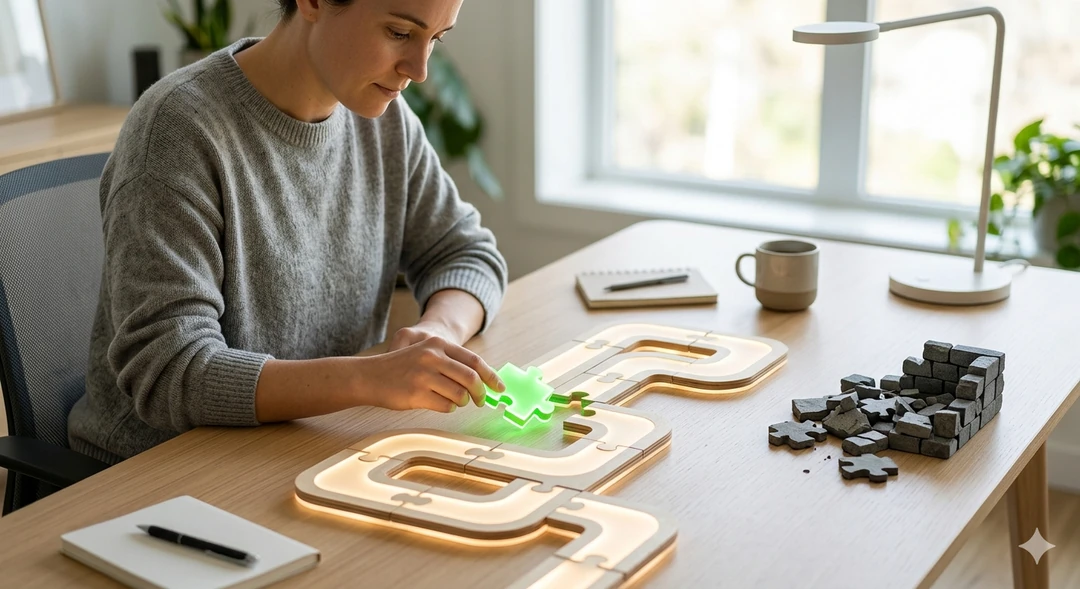
If motivation is unreliable internally, the solution is to build it externally.
Research on ADHD supports this. Structured systems, especially those that include organization and behavioral strategies, improve follow-through and task completion.
But this only works if the system is concrete.
Here is what that looks like in real life:
- Pairing tasks with rewards:
Finish a 20-minute work block, then watch a short video or grab a snack you enjoy - Timed work cycles:
Work for 15-25 minutes, then take a planned, guilt-free break - Gamified task lists:
Turning tasks into points, streaks, or visible progress bars
These are not just productivity tricks. They directly change how the task feels to your brain.
Instead of relying on effort alone, you are adding:
- Clear starting points
- Immediate payoff
- Reduced friction
That combination makes action more likely.
And once you accept that external systems can create motivation, the next step is to make one that is simple enough to actually use.
If you want a shortcut, some apps already do this by turning tasks into rewards with built-in points, streaks, or progress tracking. They act like a ready-made version of what you are about to build. Try a tool that turns your to-do list into a reward system: [AFFILIATE_LINK]
The Dopamine Menu: A Simple Way to Make Tasks Easier to Start

A dopamine menu is exactly what it sounds like.
It is a short list of small, enjoyable rewards that you intentionally pair with tasks to make starting easier.
Instead of waiting for motivation, you create it.
Think of it like this:
- Tasks = effort
- Menu = immediate reward options
- System = pairing the two together
Here are simple examples of a dopamine menu:
- Watch a 5-minute video
- Drink your favorite coffee or snack
- Scroll social media for a set time
- Listen to music you like
- Step outside for fresh air
On their own, these are distractions. Used intentionally, they become tools.
The key is pairing them with effort.
For example:
- Write for 15 minutes → then watch one video
- Clean your room → then scroll for 10 minutes
- Start an assignment → while listening to music you enjoy
Now the task is not just effort. It comes with a built-in reward.
Here is a simple way to build your own dopamine menu:
Step 1: List 5-10 small rewards
Choose things that feel good but are easy to limit
Step 2: Break tasks into small chunks
Aim for 10-25 minute blocks, not huge sessions
Step 3: Pair each task with a reward
Decide the reward before you start
Step 4: Remove friction
Have everything ready so starting is easy
Step 5: Repeat consistently
The goal is not perfection, but making starting easier over time
This works for ADHD because it matches how motivation actually functions.
You are not forcing your brain to care about distant outcomes. You are giving it a reason to act now.
It also reduces the biggest barrier: starting.
Once you begin, momentum often follows. The dopamine menu simply helps you cross that first gap.
Why This Changes Everything
The biggest shift here is not the tool. It is the mindset.
You stop asking yourself to be more disciplined, and start designing systems that make action easier.
ADHD does not mean you cannot be productive. It means your productivity has to be built differently.
A dopamine menu is one simple way to do that:
- It turns tasks into something more engaging
- It creates immediate rewards
- It lowers the effort needed to start
You are not fixing motivation. You are engineering it.
And that is a much more reliable strategy.
Start small. Build a simple menu. Try it on one task today.
Subscribe for evidence-based systems that make focus and productivity easier to manage.
What is one task you keep avoiding, and what kind of reward would actually make you start it?