

QBI 199A Phase-Out Math for Founders: How to Keep Your 20% Deduction Above $200K
The 2026 QBI deduction phases out starting at $201,750 (single) or $403,500 (MFJ) — here's how pass-through founders use aggregation elections, W-2 wage strategies, and entity structure to keep the full 20% deduction as income scales.

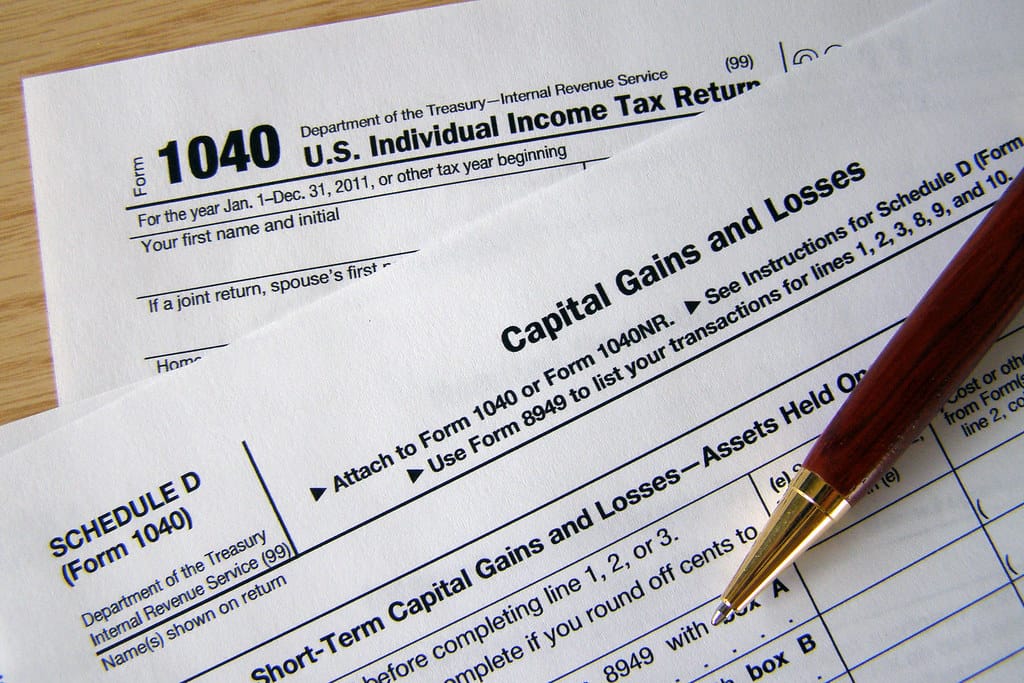
Last reviewed: June 8, 2026 — Thresholds reflect Rev. Proc. 2025-32 §4.26 (enacted). OBBBA provisions (§70105 $400 floor, widened phase-in range) reflect the One Big Beautiful Bill Act as signed into law. Verify current IRS guidance if filing before IRS implementing regulations are issued. General information only — not professional tax advice. Consult a CPA or tax attorney before making structural changes to your business or filing strategy.
By Rafael Negreiros, Tax Strategist | Reviewed June 8, 2026
The QBI deduction phase-out founders 2026 reality is this: a founder earning $220K net from an S-corp or LLC taxed as a partnership is already inside the phase-out corridor — and the math gets punishing fast. Section 199A’s 20% qualified business income deduction, now made permanent by the One Big Beautiful Bill Act (OBBBA), starts unwinding at $201,750 of taxable income for single filers ($403,500 married filing jointly) — not at a round $200K. Get your income systems wrong and a six-figure deduction evaporates before you realize it. I’ve mapped this mechanics problem the same way I’d map a cost-system leak: find where value exits the pipe, then close the valve.
Qualified Business Income is the net amount of income, gain, deduction, and loss from a qualified U.S. trade or business. It excludes: W-2 wages the owner receives as reasonable compensation from an S-corp, guaranteed payments to partners, short-term and long-term capital gains, dividends, and interest income not allocable to the business. Getting this definition wrong — treating owner salary or capital gains as QBI — is the most common misapplication.
- Single / HOH / QSS: Phase-out begins $201,750 → fully out at $276,750 (SSTB) / wage-limited (non-SSTB)
- Married Filing Jointly: Phase-out begins $403,500 → fully out at $553,500 (SSTB) / wage-limited (non-SSTB)
- OBBBA expansion: Phase-in range widened from $50K/$100K to $75K/$150K effective 2026
- OBBBA floor: Minimum $400 deduction if QBI ≥ $1,000 and taxpayer materially participates (OBBBA §70105, Code §199A(i))
Formula: Applicable Percentage = 1 − [(Taxable Income − Threshold) ÷ Phase-In Range]
For 2026: Phase-In Range = $75,000 (single/HOH) / $150,000 (MFJ). Prior to OBBBA: $50,000 / $100,000. The applicable percentage scales your QBI, W-2 wages, and UBIA proportionally before the deduction is computed. Place this formula alongside the Phase-In Range values so the variables are always self-contained.
What the Phase-Out Actually Means for Your Pass-Through Income
Section 199A lets eligible pass-through founders deduct up to 20% of qualified business income (QBI) — income from a partnership, S-corp, or sole proprietorship — before applying their marginal income tax rate. On $300K of QBI, that’s a potential $60K deduction. At a 32% federal rate, that’s $19,200 back in your operating stack. The problem: the deduction doesn’t cliff-drop; it phases out using a proportional reduction formula that interacts differently for two types of businesses.
At $195,000 taxable income today, you are fully below the $201,750 entry threshold and qualify for the complete 20% deduction. But your buffer is only $6,750. A 3.5% revenue increase with no structural changes — no additional pre-tax retirement contributions, no new deductions — crosses the line and puts your deduction in partial phase-out. If you are growing, model your threshold exposure now: the time to build the right structure is before your income reaches $201,750, not after.
Type 1 — Non-Specified Service Trade or Business (non-SSTB): Product companies, SaaS businesses, real estate operators, manufacturers, and most e-commerce founders. Once your taxable income exceeds the entry threshold, your deduction shifts from a clean 20%-of-QBI calculation to the lesser of 20%-of-QBI or a W-2 wage and capital-basis cap. The deduction isn’t eliminated — it’s restructured. Engineering your way back to a full deduction is a payroll and capital problem, not a revenue problem.
Type 2 — Specified Service Trade or Business (SSTB): Consulting, law, accounting, health, financial services, and any business whose principal asset is the owner’s reputation or skill. Founders in consulting, coaching, agency, and advisory roles must pay particular attention to SSTB classification risk — if your business is classified as an SSTB, the phase-out is binary at the exit threshold: above $276,750 (single) or $553,500 (MFJ), your QBI deduction is zero. No wage trick or aggregation election rescues it at that point. The only workable levers are reducing taxable income below the exit threshold or restructuring toward a non-SSTB income stream. Misclassifying an SSTB as a non-SSTB is one of the most expensive errors a founder can make on a pass-through return — particularly for consulting firms with some product revenue, which must carefully evaluate the “incidental SSTB” rules under Treas. Reg. §1.199A-5.
The OBBBA’s widened phase-in range (from $50K to $75K for single filers) gives non-SSTB founders a slightly larger corridor to work within before hitting the full wage limitation — but it doesn’t change the SSTB exit cliff.
The W-2 Wage and Capital-Basis Limitation: Your New Constraint System
Above the entry threshold, non-SSTB founders face a hard cap. The deduction becomes the lesser of:
- 20% × QBI, or
- The greater of: (a) 50% of W-2 wages paid by the business, or (b) 25% of W-2 wages + 2.5% of unadjusted basis immediately after acquisition (UBIA) of qualified property
For a solo founder running a lean S-corp with no employees — a common early-stage structure — this is a trap. Your QBI might be $350K, but if you pay yourself $120K W-2 reasonable compensation and have no other employees, your wage-test limit under prong (a) is just $60K. Your deduction is therefore capped at $60K, not the $70K the 20% calculation would produce. That’s a $10K gap — roughly $3,200 in additional federal tax at the 32% bracket.
For multi-member LLCs taxed as partnerships, partners themselves cannot be on W-2 payroll — only employees and S-corp shareholder-employees receive W-2s. However, W-2 wages paid to non-partner employees of the partnership do count toward the §199A wage test. Guaranteed payments to partners do not count. Partners who want to generate W-2 wages for §199A must either have the entity employ other workers or elect S-corp treatment and take a shareholder-employee W-2. This distinction matters significantly for multi-founder LLC structures where all income flows as guaranteed payments and there are no separate employee payrolls.
| Scenario | QBI | W-2 Wages | 20% QBI | 50% Wages Limit | Actual Deduction |
|---|---|---|---|---|---|
| Solo S-corp, owner only | $280,000 | $120,000 | $56,000 | $60,000 | $56,000 |
| S-corp + 2 employees | $280,000 | $220,000 | $56,000 | $110,000 | $56,000 |
| LLC default, $0 W-2 wages | $280,000 | $0 | $56,000 | $0 | $0 |
| S-corp + spouse W-2 $80K | $280,000 | $200,000 | $56,000 | $100,000 | $56,000 |
Note: Non-SSTB above threshold. Deduction equals the lesser of 20% × QBI or the wage/property limit. In rows 1, 2, and 4, the 20%-of-QBI figure is the binding constraint — adequate wages simply unlock the full amount. Row 3 illustrates total deduction loss from lack of W-2 structure.
The lesson from Scenario 3 is severe: a high-revenue LLC founder who never elected S-corp treatment, paying all income as a guaranteed payment or self-employment income with no W-2, gets a $0 deduction above the threshold. This is one of the highest-cost structural omissions in early-stage operator setups.
Resolving a $0-deduction LLC structure requires two actions in sequence:
- File Form 2553 (S-corp election) — due by March 15 for the current tax year. A late election may be available with IRS relief under Rev. Proc. 2013-30 if you can demonstrate reasonable cause. Mid-year elections are sometimes possible; your CPA needs to evaluate the specific facts.
- Establish a documented W-2 for reasonable compensation — the IRS requires S-corp owner-employees to take wages commensurate with the services performed before taking distributions. Run payroll before year-end and issue the W-2 on time.
Steps 2 and 3 in the conclusion playbook below map the full sequence. The OBBBA mid-year tax audit checklist for founders covers the entity structuring timeline in detail.
SSTB Phase-Out Math: The Consulting Founder’s Hard Ceiling
If your business is classified as an SSTB — consulting, coaching, agency work, financial advisory, legal, or any practice where the principal asset is your knowledge or reputation — the phase-out math is more aggressive. The IRS uses an “applicable percentage” that scales linearly from 100% at the entry threshold to 0% at the exit threshold.
Applicable Percentage = 1 − [(Taxable Income − Threshold) ÷ Phase-In Range]
For 2026: Phase-In Range = $75,000 (single/HOH) / $150,000 (MFJ) — widened from $50,000/$100,000 under the OBBBA.
Entry threshold: $201,750 (single) / $403,500 (MFJ) | Exit threshold: $276,750 (single) / $553,500 (MFJ)
At the applicable percentage, your QBI, W-2 wages, and UBIA are all proportionally reduced before computing the deduction. Above the exit threshold, the applicable percentage hits zero — and so does your deduction.
Example — Single consulting founder, TI $245,000:
- Entry threshold: $201,750 | Exit: $276,750 | Range: $75,000
- Income above threshold: $245,000 − $201,750 = $43,250
- Applicable %: 1 − ($43,250 ÷ $75,000) = 42.3%
- If base QBI deduction = $50,000 → Reduced deduction = 42.3% × $50,000 = $21,150
For the same founder at $280,000 TI — just $3,250 above the exit — the deduction is $0. No transition relief. This is why SSTB classification risk deserves its own line item in your entity planning review. If your consulting business also generates software licenses, product royalties, or recurring SaaS revenue, you may be able to unbundle the non-SSTB income stream into a separate entity that qualifies for the full deduction independent of the SSTB phase-out. I cover income-level management more broadly in the context of the ACA subsidy cliff and income levers for 2026 — the same pre-tax reduction plays that reduce MAGI for healthcare also pull taxable income below the SSTB exit threshold.
The Aggregation Election: Pooling Wages Across Entities
The aggregation election under Treas. Reg. §1.199A-4 is one of the most powerful and least-used tools in the above-threshold founder’s kit. It lets you combine QBI, W-2 wages, and UBIA from multiple commonly-owned non-SSTB businesses into a single pool for purposes of the deduction calculation.
Why it matters: You might own Entity A (high QBI, low wages) and Entity B (low QBI, high wages). Computed separately, Entity A’s deduction is capped at 50% of its own wages — which is small. Entity B’s deduction is uncapped because its wages are large relative to its QBI. By aggregating, you draw wages from Entity B to support Entity A’s QBI. The total deduction across both entities increases.
Eligibility requirements (all four must be met):
- 50% or more common ownership in each business being aggregated
- Same tax year across all aggregated entities
- No SSTB in the aggregation group — you cannot bundle an SSTB with a non-SSTB
- At least 2 of 3 operational integration factors: (a) same or complementary products/services offered together; (b) shared facilities or centralized business operations (staff, accounting, IT, HR); (c) operations coordinate or depend on each other
Practical example — founder operating an e-commerce brand and a non-SSTB operations services arm: If both entities share the same back-office, you own 100% of each, and the services arm offers work closely tied to the brand (not professional advice), the aggregation election likely qualifies. You file Form 8995-A Schedule B, listing each business, the ownership chain, and which operational factors apply. The election is irrevocable in subsequent years unless ownership or operations materially change — this is a sticky commitment that requires intentional setup, not a year-end patch.
Aggregation pools wages within a qualified group — it does not reduce your taxable income to pull below the phase-out threshold. If an SSTB is in the mix, it cannot join the aggregate. And it doesn’t help if none of your entities have meaningful W-2 wages or qualified property. Aggregation solves the wage distribution problem, not the income reduction problem.
The Spouse W-2 Strategy and the Second Entity Play
Two structural levers frequently overlooked in founder tax planning:
Lever 1: Paying a Spouse Bona Fide W-2 Wages
If your spouse performs genuine work in the business — marketing, operations, customer success, bookkeeping — paying them documented W-2 wages from your S-corp has a dual effect. First, it increases total W-2 wages paid by the business, expanding the 50%-of-wages limit ceiling. Second, on a joint return, those wages count toward your household’s W-2 wage pool for the §199A wage test. A spouse paid $80,000 in W-2 wages adds $40,000 to your 50%-of-wages cap, which is exactly the headroom needed to unlock a deduction that would otherwise be wage-capped (see Scenario 4 in the table above).
The IRS requires the work to be real, the wages to be reasonable, and the compensation to be reported on a W-2 issued by the business. A spousal W-2 that exists only on paper is compensation fraud, not tax planning. When the work is legitimate, this is one of the cleanest structural plays available.
Lever 2: Structuring a Second Pass-Through Entity
For founders whose primary business is an SSTB, launching a structurally separate non-SSTB entity — a product line, a SaaS tool, a real estate holding entity, a course or content platform — creates a second QBI stream entirely outside the SSTB phase-out. The non-SSTB entity files its own §199A computation. If its income is below the phase-in threshold, or if it has adequate W-2 wages above the threshold, it generates its own deduction regardless of what happens in the SSTB entity.
This isn’t an accounting trick — it’s a legitimate structural diversification that also serves the underlying business goal of reducing revenue concentration in a single SSTB. The entities must be genuinely separate in operations, books, and purpose. Co-mingled operations without separate books collapse the separation for both business and tax purposes.
The OBBBA’s new $400 minimum deduction floor (effective 2026) also provides a real backstop: even if your non-SSTB entity generates modest QBI above $1,000 and you materially participate, you’re guaranteed at least $400 in deduction — ensuring the structural cost of maintaining the entity has some minimum tax offset.
Pre-Tax Income Reduction: The Threshold Reset Play
For SSTB founders whose taxable income is within striking distance of the entry threshold — say, single filers between $201,750 and $276,750 — aggressive pre-tax contributions can pull TI below $201,750 and restore the full, unphased deduction.
Key pre-tax levers for 2026:
- Solo 401(k) employee deferral: Up to $23,500 ($31,000 if age 50+, $34,750 if age 60–63 under SECURE 2.0)
- S-corp employer match contribution: Up to 25% of W-2 compensation. The combined employee + employer limit is approximately $70,000 (inflation-adjusted for 2026), assuming W-2 compensation that supports a full employer match. At lower W-2 salaries, the combined total will be lower — for example, a $120K W-2 supports an employer match of up to $30,000, giving a combined total of $53,500 at the standard deferral limit. Model this against your specific W-2 level.
- Defined benefit / cash balance plan: High-earning founders over 45 can often contribute $100K–$250K+ annually, creating deductions that dwarf the 401(k) limits
- Self-employed health insurance deduction: Premiums for yourself and your family, deducted above-the-line against gross income
A single founder with $240,000 in taxable income (inside the SSTB phase-out corridor) who maximizes a Solo 401(k) at the combined $70,000 limit (employer + employee, assuming full W-2 compensation support) drops to approximately $170,000 TI — well below the $201,750 entry threshold. Result: full 20% deduction on the QBI that remains. If your W-2 compensation only supports a partial employer match, model your specific combined contribution limit with your payroll data before projecting the taxable income drop. The math on this move in 2026 is worth running with a tax advisor who specializes in pass-through structures.
These same pre-tax levers appear in the discussion of how founders can manage income for the ACA subsidy cliff — deductions that reduce taxable income for §199A phase-out purposes often reduce MAGI for healthcare subsidies simultaneously, compounding the return on a single structural move.
The OBBBA $400 Minimum Floor: What It Actually Changes
OBBBA §70105 added a new minimum deduction provision (Code §199A(i)): if a taxpayer has at least $1,000 of aggregate QBI from active qualified trades or businesses in which they materially participate, the §199A deduction is the greater of the regular computed deduction or $400. Both the $1,000 QBI floor and the $400 minimum are indexed for inflation after 2026.
This primarily protects very small active operators — a side-business founder with modest net income who is phased out due to high employment income can still claim $400. For most founders in the $150K–$600K range this article targets, the floor is a backstop rather than a primary planning point. Its broader significance is structural: it signals Congress’s intent to keep §199A accessible across the founder income spectrum, now that the deduction is permanently enshrined in the tax code.
The permanence itself is the larger OBBBA dividend. Before the Act, §199A was set to expire after 2025. Every multi-year entity structure built around §199A carried legislative risk. That risk is now resolved. You can build your payroll structure, your aggregation election, and your entity stack around §199A with a permanent-code baseline — and that changes the cost-benefit math on setup costs for spousal payroll, aggregated pass-throughs, and defined benefit plans. For a broader read on OBBBA’s pass-through provisions beyond §199A, the OBBBA mid-year tax audit guide maps the full set of pre-deadline moves.
QBI Phase-Out FAQ for Founders
What are the 2026 Section 199A QBI deduction phase-out thresholds?
For 2026, the QBI deduction phase-out begins at $201,750 taxable income (single/HOH) and $403,500 (MFJ). For SSTB owners, the deduction is fully eliminated above $276,750 (single) and $553,500 (MFJ). The phase-in range is $75,000 for single filers and $150,000 for MFJ filers, widened from $50,000/$100,000 under prior law by the OBBBA. These thresholds reflect Rev. Proc. 2025-32 §4.26.
If I’m an S-corp owner above $200K, do I automatically lose the QBI deduction?
No — but the deduction mechanism changes. Above the entry threshold ($201,750 single / $403,500 MFJ), your deduction is limited to the lesser of 20% of QBI or a wage/property cap. If your S-corp pays adequate W-2 wages — the 40% planning target is derived from the wage test algebra: to fully pass the 50%-of-wages test you need wages ≥ 40% of QBI (because 50% × wages ≥ 20% × QBI solves to wages ≥ 40% × QBI) — the wage limit is rarely the binding constraint. You lose the full deduction automatically only if you’re an SSTB owner above the exit threshold ($276,750 single / $553,500 MFJ).
My business is classified as a consulting SSTB. Can aggregation save my QBI deduction?
Not directly. The aggregation election under Treas. Reg. §1.199A-4 explicitly excludes SSTBs — you cannot aggregate an SSTB with any other entity. However, if you have a separate non-SSTB entity (e.g., a SaaS product or a real estate holding), that entity computes its own §199A deduction independently and is unaffected by your SSTB phase-out. The SSTB entity’s deduction can only be preserved by reducing your taxable income below the exit threshold through pre-tax retirement contributions or other above-the-line deductions.
Does paying my spouse W-2 wages shift our MFJ phase-out threshold?
No — the MFJ thresholds are fixed at $403,500 entry / $553,500 exit for SSTBs in 2026, regardless of household wage structure. Spousal W-2 wages help by increasing the business’s total W-2 wage pool, which expands the 50%-of-wages ceiling for the non-SSTB wage test — not by changing the income thresholds. On a joint return, household taxable income is what triggers the phase-out, so wages paid to a spouse show up on the same 1040 and don’t reduce the joint TI figure that determines phase-out position.
Conclusion: Engineering Your Deduction, Not Just Earning Through It
The QBI deduction phase-out founders 2026 problem is not primarily an income problem — it’s a structural problem. Whether you’re a non-SSTB founder losing ground to the wage limitation or an SSTB founder approaching the exit cliff, the fix is almost always upstream: entity structure, payroll design, aggregation election, or pre-tax reduction. None of these levers work retroactively. They require intentional design before the tax year closes.
The playbook in order of priority:
- Confirm your SSTB classification status — misclassification in either direction is expensive. Consulting, coaching, and agency founders face particular risk.
- Establish S-corp election and reasonable W-2 compensation if you’re above the threshold and currently operating as a single-member LLC with guaranteed payments. File Form 2553 by March 15 (or seek late-election relief) and establish documented payroll before year-end.
- Audit your wage pool — include all bona fide employee W-2s, including a properly paid spouse, in the 50%-of-wages limit calculation. For partnership founders: only W-2 wages paid to non-partner employees count; guaranteed payments to partners do not.
- Evaluate aggregation if you own two or more non-SSTB entities with complementary wage/QBI profiles.
- Model pre-tax contributions — Solo 401(k), employer match (up to the $70K combined limit against your actual W-2 compensation), and defined benefit — against the income threshold before year-end estimated tax deadlines.
- Separate non-SSTB revenue streams into a structurally distinct entity if your primary business is an SSTB with growing product or SaaS revenue.
This is cost-system thinking applied to the tax stack: identify the constraint, redesign the flow, lock in the structure before the clock resets. The permanence of §199A under the OBBBA means the investment in getting this right compounds over every future tax year. Bring in a CPA or tax attorney who works primarily with pass-through founder structures to verify which of these moves apply to your specific facts.
This article is general information for educational purposes only. It is not professional tax, legal, or financial advice, and does not establish any professional relationship. Tax law is complex and fact-specific. Consult a licensed CPA, enrolled agent, or tax attorney before making any decisions based on this content. Primary sources: IRS Rev. Proc. 2025-32; Treas. Reg. §1.199A-4 (eCFR); Treas. Reg. §1.199A-5 (eCFR/SSTB classification); IRS QBI Deduction Overview; Warren Averett OBBBA QBI Breakdown.
Keep reading

Can a Non-Coder Actually Ship With Cursor? A Developer’s Honest Test
Cursor is not no-code. Here is what a non-technical founder can realistically ship in weeks — and when you still...

Self-Hosting n8n: The Real Cost vs Cloud (and the 6 hrs/week DevOps Tax)
A founder-facing TCO teardown of n8n Cloud vs self-hosted infra — including the DevOps hours nobody puts in the spreadsheet.

reMarkable vs Boox vs Kindle Scribe: Which One Actually Replaces the Note Vault You Abandoned?
An honest, spec-and-review-based comparison of reMarkable, Boox, and Kindle Scribe for anyone who quit Obsidian or Notion and wants notes...

6 Books That Actually Changed How I Run a One-Person Business (2026)
Not a top-20 listicle. Six books I actually read and applied while running a one-person AI business, and the one...

Do Phone Lock Boxes Actually Work for Founder Focus? The Commitment-Device Case
A clear-eyed look at whether phone lock boxes help a one-person founder focus — grounded in commitment-device research, with free...
The ‘Second Brain’ is Over: Why You Need a Second Executioner
Stop hoarding notes and start shipping. Discover why the Second Brain fails and how the Second Executioner model uses Personal...
You've reached the end — no more posts to load.
No comments yet — be the first to share your thoughts.