

A lot of founders think they have a sales problem when they really have a repetition problem. That was the shift that clarified this for me. The issue was not customer conversations themselves. The issue was having the same conversation live, from scratch, again and again. That is why an async-first sales system makes more sense than simply trying to avoid sales calls. It lets founders keep the parts of founder-led sales that matter most, like discovery and fit, while moving repeatable education, follow-up, and transaction steps into a simple system.
Why real customer conversations still matter early

In the earliest stage, direct customer conversations still matter because they teach things a system cannot teach yet. This is where founders hear the exact words buyers use, notice what creates hesitation, and learn which promises actually resonate.
In a 2022 First Round Review podcast interview, Peter Kazanjy argued that founders should do the selling themselves early on because selling is also how they learn the market.
“Founders have to be the person to sell it initially.” – Peter Kazanjy, Co-founder of Atrium and author of Founding Sales
The founder-level takeaway is simple: early sales conversations are not just for closing revenue. They are part of product and positioning discovery.
But that does not mean every part of the sales journey should stay live forever. The useful distinction here is discovery versus repetition. Discovery creates insight. Repetition usually means the insight already exists and just has not been turned into an asset yet.
First Round Review made a similar point in a 2023 article on early go-to-market habits. Emery Rosansky’s advice was to build simple GTM process early instead of improvising each time.
“Set good GTM habits and processes in the early days of a startup.” – Emery Rosansky, VP of GTM, First Round
The practical takeaway is that founders should keep discovery, fit, and hard objections live, but move repeated basics into a clearer process. Once the same pricing question, onboarding concern, or scope explanation keeps showing up, it probably belongs in a demo, FAQ, email sequence, or proposal instead of on another call.
How async assets reduce repetitive live selling
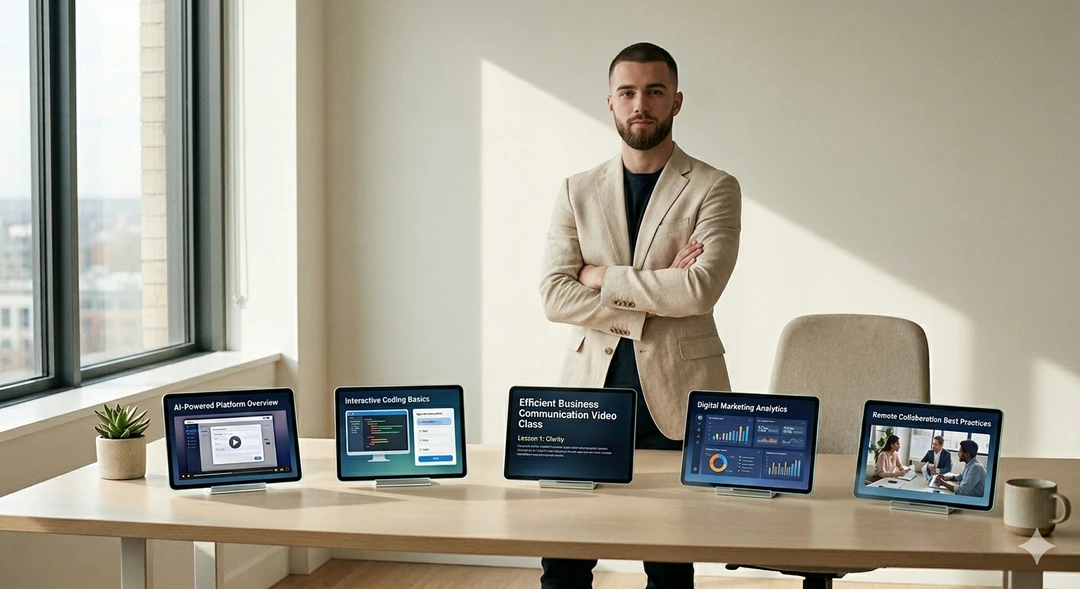
Selling starts before a call. A clear homepage can explain the problem. A short demo can answer first-round questions. An FAQ can handle standard objections. A simple sign-up or inquiry flow can move buyers forward before they ever talk to a founder.
OpenView’s 2022 report, Your Guide to PLG Benchmarks, is useful because it includes genuinely early-stage companies. In that sample, 24% of respondents were under $1M ARR and 55% identified as product-led. That matters because it shows that even smaller companies are already using self-serve and product-assisted paths as part of how they sell.
The same report also shows that parts of the buying journey can happen before a live conversation. It lists freemium website-visitor-to-signup conversion at 6% and freemium signup-to-paid conversion at 5%. Those are different stages, but together they support a simple point: website messaging, onboarding, and self-serve paths already do real selling work.
That is why this matters for an async-first sales system and for sales automation for startups more broadly. The evidence does not suggest founders disappear from the process. It suggests they can reduce repeated live explanation by giving buyers clearer assets earlier. When that happens, the website stops acting like a brochure and starts acting like part of the sales system.
Which calls should stay live and which should move async

The real promise is not zero calls. It is fewer calls that repeat the same explanation.
OpenView said this directly in its 2021 Product Benchmarks report:
“Product-led doesn’t mean no sales.” – OpenView, B2B SaaS benchmark report publisher
That keeps expectations realistic. Async and self-serve paths can carry part of the journey, but human sales still matters when a buyer needs judgment, reassurance, or a real conversation about fit.
A good rule is to keep calls live when the outcome depends on nuance. A first conversation with a prospect who has a messy workflow, unusual requirements, or trust concerns should stay live. That is a founder-led sales moment because a human perspective changes the outcome.
Other calls are strong candidates for async replacement. If a second call mostly repeats pricing, onboarding steps, scope, standard deliverables, or common objections, the problem is probably not a lack of human contact. It is a lack of good assets. A stronger demo, a better FAQ, a clearer follow-up email, or a more complete proposal can often replace that live explanation.
That is the practical shift: protect live time for discovery and fit, and use async assets for the repeatable parts.
Where to start when live selling feels too heavy

The easiest way to implement this is not by building a huge stack. It is by starting with the repeatable friction points that drain founders fastest: follow-up, proposals, and checkout.
Follow-up comes first because it quietly breaks a lot of early sales processes. The U.S. Small Business Administration makes a straightforward small-business case for CRM: it helps teams track leads and turn them into closed sales faster. For a founder, that matters because scattered leads create more live selling pressure. When follow-up depends on memory, the process gets heavier than it needs to be.
Proposals are another strong place to start. Good Work, a small agency featured in a PandaDoc case study, reported a 30% increase in close rate after proposal automation. That is not universal proof, but it is a useful example of what happens when repeated explanation turns into a reusable proposal instead of another live call.
Checkout is often the last thing founders look at, even though it can create avoidable friction at the exact moment a buyer is ready. Stripe’s controlled experiment is one of the stronger proof points here. Stripe found that adding at least one relevant payment method increased conversion by 7.4% on average and revenue by 12%. That suggests some stalled deals are not persuasion problems at all. They are checkout problems.
For most teams, a lean setup is enough: one clear website CTA, one CRM, one short demo, one proposal template, and one easy checkout path. That will not remove the founder from selling, but it can remove a surprising amount of repeated live selling pressure.
Conclusion
The most useful shift is to stop treating every sales problem like a people problem. Often, it is a system problem. Early-stage founders still need live conversations because that is how they learn the market, test fit, and handle nuance. But once the same explanations start repeating, an async-first sales system becomes the smarter move.
That is what makes this model practical. The website can educate. The CRM can support follow-up. The proposal can handle standard explanation. The checkout flow can make it easier for ready buyers to move. Then live calls can stay focused on the places where founder judgment actually matters most.
For a simple starter stack, see the CRM, proposal, and checkout tools I recommend first.
Subscribe for practical systems that help small teams grow without turning every sale into a performance.
What still pulls you into live selling most often: follow-up, proposal explanation, or checkout friction?